This week, before emancipation, Appalachia provided pathways to freedom for enslaved people trying to escape bondage. A new project identifies more than two dozen previously unknown underground railroad sites. Also, the Fly Around Music & Arts Festival in North Carolina was inspired by the hard work that followed Hurricane Helene. And, a ballad about floods recorded a generation ago still provides solace for people today.
The Supreme Court has declined to take up another appeal from a group of landowners challenging the use of eminent domain by developers of the Mountain Valley Pipeline. The decision comes as many await a decision by the Federal Energy Regulatory Commission on whether the pipeline can begin service by May 23. Developers have asked to begin running gas in the pipeline by June.
The Supreme Court’s rejection of the Bohon case brings to a close the years-long effort by the six landowners in Montgomery, Franklin and Roanoke Counties. They had argued the use of eminent domain on the for-profit pipeline project was unconstitutional.
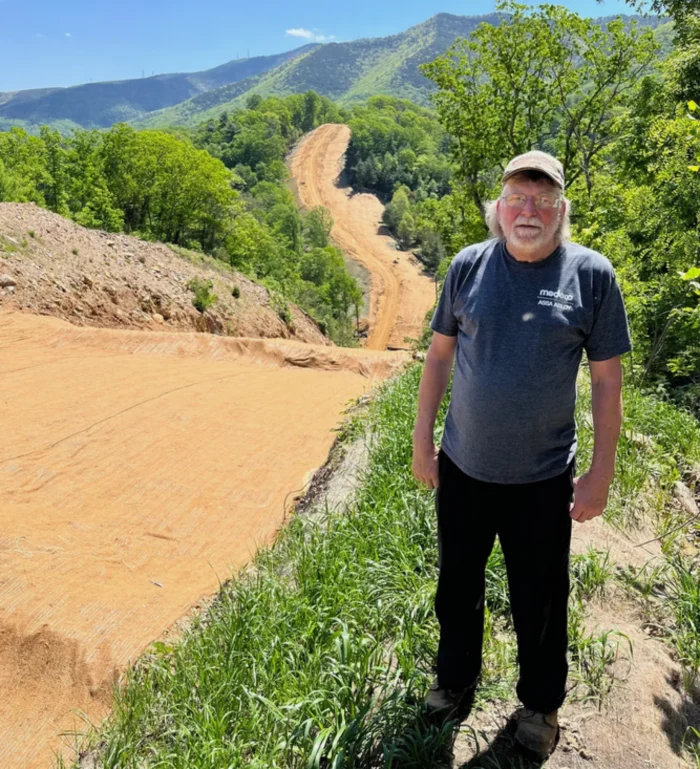
“That’s our home,” said Cletus Bohon, one of the landowners who filed the case. “It just shouldn’t be legal for them to come in and take our property like that if we’re not willing to settle with them.” Bohon spoke with Radio IQ last year.
Cletus Bohon is pictured standing on his property near Poor Mountain in Roanoke County, Virginia.
Photo Credit: Mia Yugo
In a statement issued May 20, after the Supreme Court’s decision, Yugo wrote, “I think what’s important for the public to know is that no court anywhere has ever held that we are wrong on the merits. Nor has the Supreme Court today said that we are wrong.” She added that she expects to see cases with similar issues emerge again. “It is only a matter of time before the merits issue resurfaces again at the high court. As eminent domain abuse in America continues to run rampant, we predict that day is likely to come sooner rather than later,” Yugo said.
Last year, the Supreme Court sent the case back to a lower court for reconsideration, which dismissed it. The nation’s highest bench has now declined to take it up again.
The Bohon case is one of numerous lawsuits environmental groups and landowners have filed against MVP.
Last year, Senator Manchin of West Virginia inserted a section into the Fiscal Responsibility Act mandating the federal government to issue MVP authorization to finish the pipeline. That order also directed any pending cases before the U.S. Fourth Circuit Court of Appeals to be vacated. The Bohon case’s appeal before the Supreme Court was active since it was appealed to the higher court.
The company building the MVP, EQT, says the cost of the pipeline is $7.85 billion. The pipeline was originally estimated to cost $3.5 billion, and the company initially planned to have an in-service date in 2018.
Add WVPB as a preferred source on Google to see more from our team
Clean-Seas West Virginia aims to turn plastic waste into sustainable energy in the town of Quincy. A public meeting is scheduled for Tuesday, July 14 from 6 p.m. to 8 p.m. (Doors open at 5:30p.m.) in the Belle Town Hall Gym, 1100 E Dupont Ave.
Much of West Virginia remains under a flood watch through 8 a.m. Sunday. The National Weather Service predicts multiple thunderstorms, some of them severe, across the state.
The industrial warehouse fire in Parkersburg is completely out and the shelter in place order has been lifted. Now is the time for cleanup and remediation, as well as an investigation into what caused the blaze.