Alert (09/29/2026): Our Parkersburg TV transmitter is still undergoing maintenance and remains temporarily inoperative. We apologize for the inconvenience.
All our programming is available via our TV livestreams on our website and WVPB Passport. Thank you for your patience!
Barbara Kingsolver is one of Appalachia’s foremost writers. She’s written a string of bestsellers, like "The Poisonwood Bible" and "Demon Copperhead," which won her the Pulitzer Prize. Inside Appalachia’s Mason Adams met Kingsolver at her home outside Abingdon, Virginia, to talk art, writing and her latest book, "Partita." We listen to an excerpt from that interview.
Proposed EPA Rule Removes Protections From Drinking Water Sources
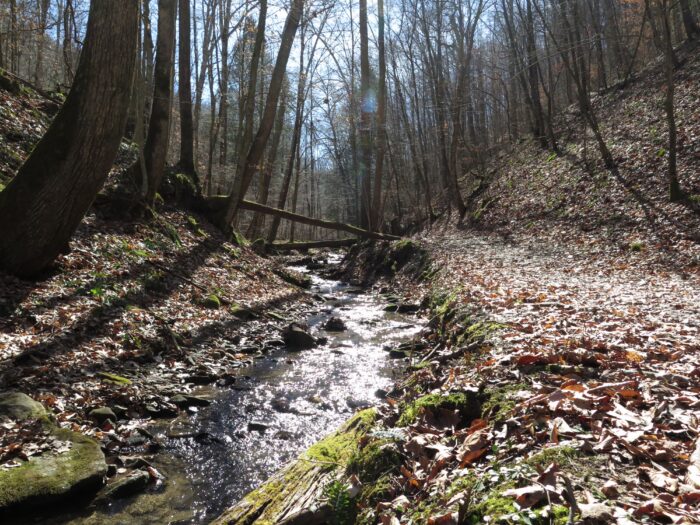
The U.S. Supreme Court ruled in 2023 that streams can only be protected under the federal Clean Water Act if they are “relatively permanent.” The EPA is currently finalizing a rule determining which kinds of streams and wetlands are protected by the Clean Water Act, and which are not. Eric Douglas/West Virginia Public Broadcasting
Listen
Share this Article
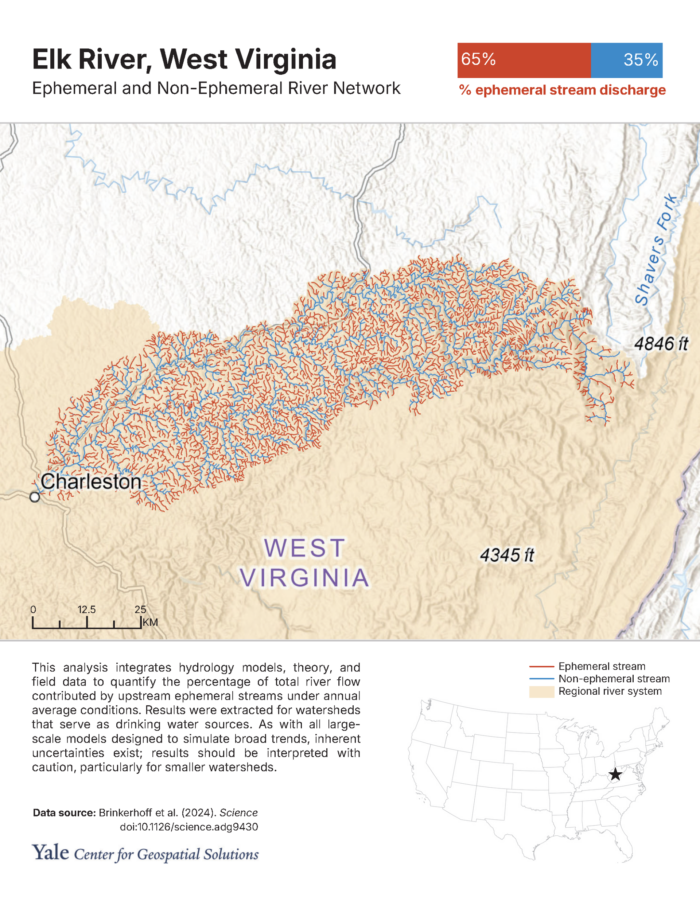
A new rule may remove protections from as much as 65% of the streams that contribute to Charleston’s drinking water.
According to a new analysis done by researchers at Yale and the University of Massachusetts, most of the capitol city’s water comes from what are called ephemeral streams. They only flow during rainy and snowy seasons.
The U.S. Supreme Court ruled in 2023 that streams can only be protected under the federal Clean Water Act if they are “relatively permanent.” The EPA is currently finalizing a rule determining which kinds of streams and wetlands are protected by the Clean Water Act, and which are not.
Nathan Hitt, chief scientist for the West Virginia Rivers Coalition, explained that removing these protections puts water supplies at risk.
“The great rivers-the Kanawha, the Elk, the Ohio, the Potomac- the majority of water in those great rivers really was sourced directly from ephemeral streams, or the smallest tips of the watershed,” he said.
The new map of headwater streams that flow into the Elk River were built using models originally developed for a nationwide study of ephemeral streams published in the journal Science. It shows that 65 of the streams that feed the Elk River are ephemeral.
The EPA’s own analysis notes that loss of protections for these streams could increase the cost to treat raw water to drinking water standards.
“In West Virginia’s mountains, water moves through a network of small streams before reaching the rivers we depend on for drinking water,” Autumn Crowe, deputy director of the West Virginia Rivers Coalition, said. “These may look small on a map, but collectively they have an enormous impact on downstream water quality. Losing protections for these waters puts our communities and their access to safe water at further risk.”
“Our research shows that small streams exert a meaningful influence on downstream, larger rivers, including systems that supply drinking water,” Craig Brinkerhoff, a river scientist and engineer at Yale, said. “All of these waters are connected and if enough of these streams were polluted or damaged in a mountainous watershed like the Elk, it could potentially impact Charleston’s drinking water supplies over the long run.”
The final rule may exclude additional streams not included in this analysis.
The new EPA rule also excludes 96 percent of the state’s wetlands from protection under the Clean Water Act, according to the agency’s draft impact analysis. Wetlands are critical for protecting drinking water quality as they trap and filter pollutants before sending cleaner water downstream.
West Virginia’s drinking water infrastructure was recently rated a D+ by the American Society of Civil Engineers due to challenges including aging systems, leaky distribution pipes, and a funding gap of nearly a billion dollars.
Hitt noted that the Clean Water Act has worked in America.
“We don’t see rivers regularly catching on fire anymore,” he said. “Worst case scenario, under what EPA is proposing, we would have more contamination. We’d have dirtier water.”
Many West Virginians have experienced drinking water contamination firsthand in the 2014 chemical leak into the Elk River that left 300,000 people without safe water.
“2014 was a wake-up call about why source water protection is so crucial in the Mountain State,” Hitt said. “That particular case was about above ground storage tanks. As soon as that happened, the legislature came together and unanimously supported protections and regulation for above ground storage tanks. Unfortunately, every legislative session since 2014, there have been efforts to roll back those protections. So this also extends to the small ephemeral streams that are essentially on the chopping block when it comes to EPA’s proposal to redefine waters of the U.S.”
The public comment period on the proposed rule closed in January. At the time, both Gov. Patrick Morrisey and Attorney General JB McCuskey issued letters of support to EPA Administrator Lee Zeldin and U.S. Army Corps of Engineers Lt. General William H. “Butch” Graham, Jr.
The EPA is currently finalizing the rule.
Add WVPB as a preferred source on Google to see more from our team
The Public Service Commission of West Virginia wants to ensure that if discontinuation of the current landline system is approved, an adequate service will be continue to be available to both new and existing customers.
Many of the devices we use in our daily lives run on rechargeable lithium-ion batteries. Be aware that damaged or incorrectly charged batteries can overheat, start a fire, or even explode.
During spooky season, popular attention turns toward ghosts and goblins – or if you live in Appalachia – cryptids. For the Appalachia + Mid-South Newsroom, Bill Lynch, producer of Inside Appalachia, brings us the story of the Flatwoods Monster.
A specific style of ballroom dance is helping disenfranchised young people find community in Appalachia. In our latest episode of Inside Appalachia, we explore LGBTQ ballroom culture and community in Roanoke, Virginia. Mason Adams has this excerpt.