Public anger over rising electricity prices likely played a role in a West Virginia Public Service Commission order last month to freeze Appalachian Power rates.
However, Appalachian Power customers have overpaid $328 million since 2018 for electricity from the Ohio Valley Electric Corporation.
Curtis Tate of West Virginia Public Broadcasting reported the story for the Appalachia-Midsouth Newsroom. He spoke with deputy managing editor John Boyle about his work.
This interview has been lightly edited for clarity.
Boyle: Hey Curtis.
Tate: Hey John.
Boyle: What gave you the idea for this story?
Tate: I had known about the Ohio Valley Electric Corporation, or OVEC, because of its involvement in the HB 6 corruption scandal in Ohio that started in 2020. It was a very big story there. I don’t think it got a lot of attention in West Virginia because no one could tie the scandal to the state.
At some point it clicked in my head: Appalachian Power was receiving a certain amount of electricity generated by the OVEC plants, which were built in 1955.
I decided to chase down how much Appalachian Power customers paid – or overpaid – for that electricity. That wasn’t available public information. I was going to have to obtain documents or do the calculation myself.
Boyle: How did you wind up talking to Devi Glick, your data expert?
Tate: I was introduced to Devi by Tony Mendoza, a Sierra Club attorney who tried to get the West Virginia Public Service Commission to look more closely at the OVEC contract costs in 2018.
The commission rebuffed him, but I knew based on my own calculations that Appalachian Power customers were subsidizing the OVEC plants’ losses, and I needed Devi’s expertise.
She testified in a case involving Appalachian Power’s sister company, Indiana-Michigan Power, and demonstrated that Michigan customers were bailing out the OVEC plants. State regulators accepted her testimony and denied more than $1 million in costs.
Boyle: Why hasn’t West Virginia done the same?
Tate: Other than in the 2018 case, no one else has raised the issue. The Public Service Commission declined to comment for our story, so we have no explanation why they haven’t looked at it again.
Boyle: You visited the OVEC power plants. What did you notice?
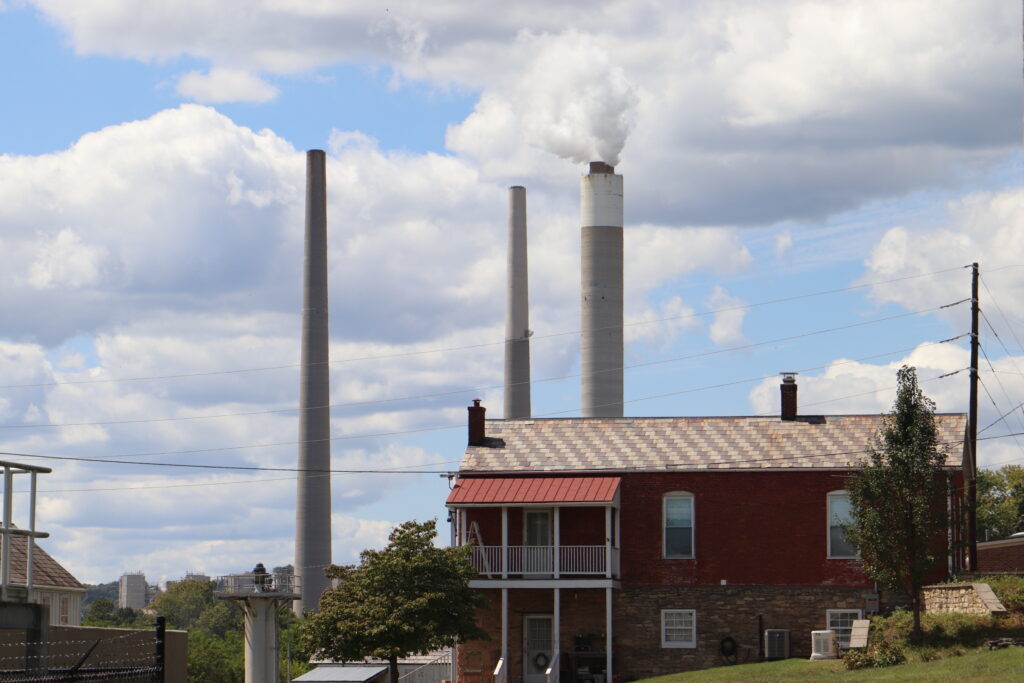
Tate: They’re big facilities, and they burn a lot of coal. I’m sure they keep a lot of people employed. One plant, Kyger Creek, is just across the Ohio River from West Virginia.
The other plant, Clifty Creek, is about 200 miles away in Indiana. Appalachian Power customers are paying more than they should for electricity from these plants, but no community in West Virginia really benefits from the payroll or the property taxes they generate.
If there’s one thing West Virginia does not lack, it’s coal generation. No state depends more on coal for electricity.
Boyle: Are there any developments since the story published?
Tate: I mentioned the HB 6 scandal in Ohio. Lawmakers earlier this year repealed the bill that subsidized the OVEC plants. The governor signed it. It became law last month.
Still, Ohio Power, another sister company of Appalachian Power, has asked state regulators to claw back $35 million for the plants from Ohio customers.
Consumer and environmental groups and the state manufacturers association have filed testimony in opposition to Ohio Power’s request.
Ohio Power claims the costs were ‘prudently and reasonably incurred.’ But practically no one else thinks so.
Boyle: What else could change?
Tate: Not much in Michigan. Indiana decided to pick up the Michigan share of the plants, so Hoosier customers will be on the hook for the OVEC losses.
I’d watch Virginia. Its State Corporation Commission is a little different from West Virginia or Indiana. Appalachian Power has customers in southwest Virginia.
Someone could make the case that those customers should not have to pay extra for the OVEC power. If Virginia disallowed it, things could get really interesting. Would the West Virginia public service commission decide to force even more costs on West Virginians? It has done so in other cases.
Also, keep an eye on the courts. If Biden’s power plant rules are upheld, the OVEC plants would need expensive upgrades or else they’d have to shut down in 2032.
Boyle: We appreciate your work, Curtis.
Tate: You bet.
This story was produced by the Appalachia + Mid-South Newsroom, a collaboration between West Virginia Public Broadcasting, WPLN and WUOT in Tennessee, LPM, WEKU, WKMS and WKU Public Radio in Kentucky and NPR.