This week, we reflect on Dolly Parton’s passing and her legacy in the region. Also, the Adaptive Climbers Festival at Kentucky’s Red River Gorge feels like home for climbers with disabilities from around the world. And, a new book spotlights Appalachian plants and encourages readers to get in touch with nature.
Marshall University To Help Unlock The Secrets Of Water Bears
Listen
Share this Article
The National Science Foundation awarded Marshall University a $366,624 grant to study how protective structures adopted by tardigrades help protect them from their environment. The study will be part of a partnership with the University of North Carolina at Chapel Hill.
Tardigrades, also known as water bears or moss piglets, are micro-animals that are found in almost every place on earth. They are known for being able to survive the harshest environments.
“Tardigrades produce these compounds known as free radicals, which are reactive chemical species, when they’re exposed to stressors,” said Derrick Kolling, chair of the Marshall University Department of Chemistry.
You can see responses to extreme conditions in nature, but the reason why tardigrades are unique is their vast variety of responses to environmental stressors such as vacuums, UV radiation, dehydration, high salt concentration, and freezing temperatures. A common response by tardigrades includes forming into a tun.
“Forming this structure called a tun, they sort-of shrink down; extrude water, and then they can stay in that state for a very long period of time,” Kolling said.
West Virginia Public Broadcasting
When a tardigrade is stressed, it enters a quasi-death state. The animal retracts its head and its eight legs and curls into a dried-up ball.
According to Kolling, looking into these chemical structures could help development in space travel and pharmaceutical storage. They might even help fight against aging.
“Throughout our lives, we develop damage in our bodies,” Kolling said. “Not that we’re necessarily going to form one of these protective states, but these things might give us insight into how humans might protect our DNA.”
In a partnership with Robert C. Byrd Institute, the research team is starting the Tardigrade Trading Post outreach program. The trading post will send scientific kits designed by the research team to be used by citizen researchers. This includes students K-12; what Kolling referred to as little citizen scientists.
The Robert C. Byrd Institute is designing 3D printed microscopes that citizen researchers can use to gather tardigrades from their backyards. On top of providing young students an opportunity to learn about micro-species, Kolling hopes that this will help the team harvest a wide variety of tardigrade species.
“A lot of water bear species are parthenogenic, which means that you only need the female to reproduce so they can reproduce asexually,” Kolling said. “I think the odds of finding a new species are pretty decent, especially if people are willing to go to places like Dolly Sods. We could raise them in the lab. If we find interesting conditions, we would characterize them genetically.”
The grant will support the graduate and undergraduate student research team for the next three years.
Marshall University
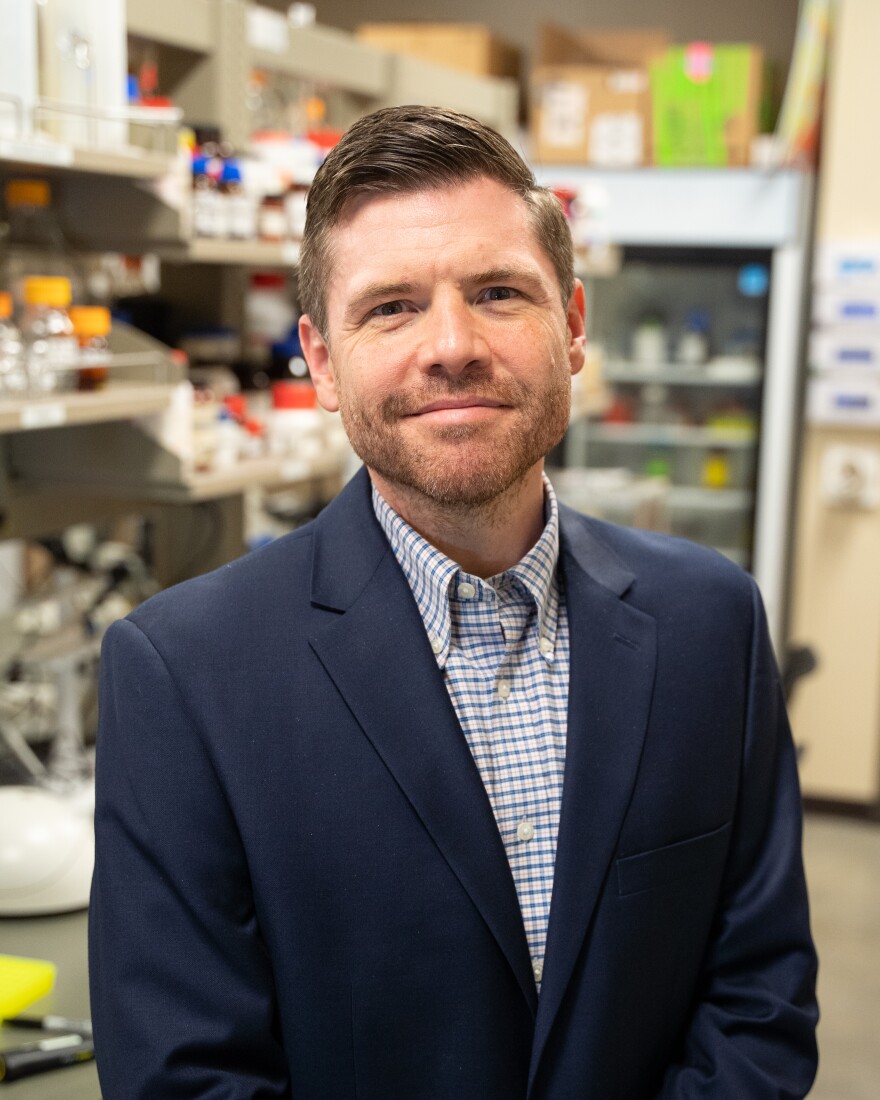
Derrick Kolling, chair of the Marshall University Department of Chemistry
Add WVPB as a preferred source on Google to see more from our team
The Bluefield State University Board of Governors reported that the university is behind on paying financial obligations by at least $1.5 million dollars and may have violated NCAA rules, among other pressing issues.
West Virginia’s rate of “disconnected youth” has improved, but nearly 24,000 young people are still neither working nor in school. Us & Them explores what leaves some young people feeling stuck — and the programs trying to reconnect them to education, work and opportunity.
Singer, actress and icon Dolly Parton visited West Virginia in 2022 to celebrate the state’s full participation in her Imagination Library, an early childhood literacy program she started in honor of her father in 1995. Dolly Parton died Tuesday after a brief illness. We listen back to an interview she did with then WVPB Executive Producer Suzanne Higgins.
Marshall University has announced a new addition to its IDEA District, welcoming Canada-based radiology firm Synthesis Health to the six-block innovation and research hub in downtown Huntington.