'Haunted' Town Already Celebrating Spooky Season
Halloween is still several weeks away, but one West Virginia town is already celebrating the season.
Continue Reading Take Me to More NewsAlert (09/29/2026): Our Parkersburg TV transmitter is still undergoing maintenance and remains temporarily inoperative. We apologize for the inconvenience.
All our programming is available via our TV livestreams on our website and WVPB Passport. Thank you for your patience!




To Educate, Inform, and Inspire by Telling West Virginia's Story

Mountain Readers Week will be held Oct. 5-9, 2026! Celebrate and foster a love of reading in children across West Virginia.
Nominate an exceptional West Virginia K-12 teacher today!

On Demand

On Demand

Stream original productions from WVPB

Watch locally produced documentaries & more.

On Demand

On Demand






West Virginia Morning

Inside Appalachia

West Virginia Week

Mountain Stage

Us & Them

The Legislature Today

The Legislature This Week

Send us your comments and questions.

Stream our board meetings.

Check out the latest WVPB news.

Sign up for our newsletter and get weekly updates.

Meet the WVPB staff.

WV Educational Broadcasting Commission, the WVPB Foundation, and the Friends of WVPB.

Come work with us!

Read our annual report and learn how we educate, inform and inspire with your support.

Sponsor impactful and engaging media and entertainment.

Use your IRA to make a gift to WVPB.

Become a member with your gift of $1,000 or more.

Make WVPB part of your legacy.

Manage your membership account.

Learn how you can Protect and Sustain West Virginia Public Broadcasting.
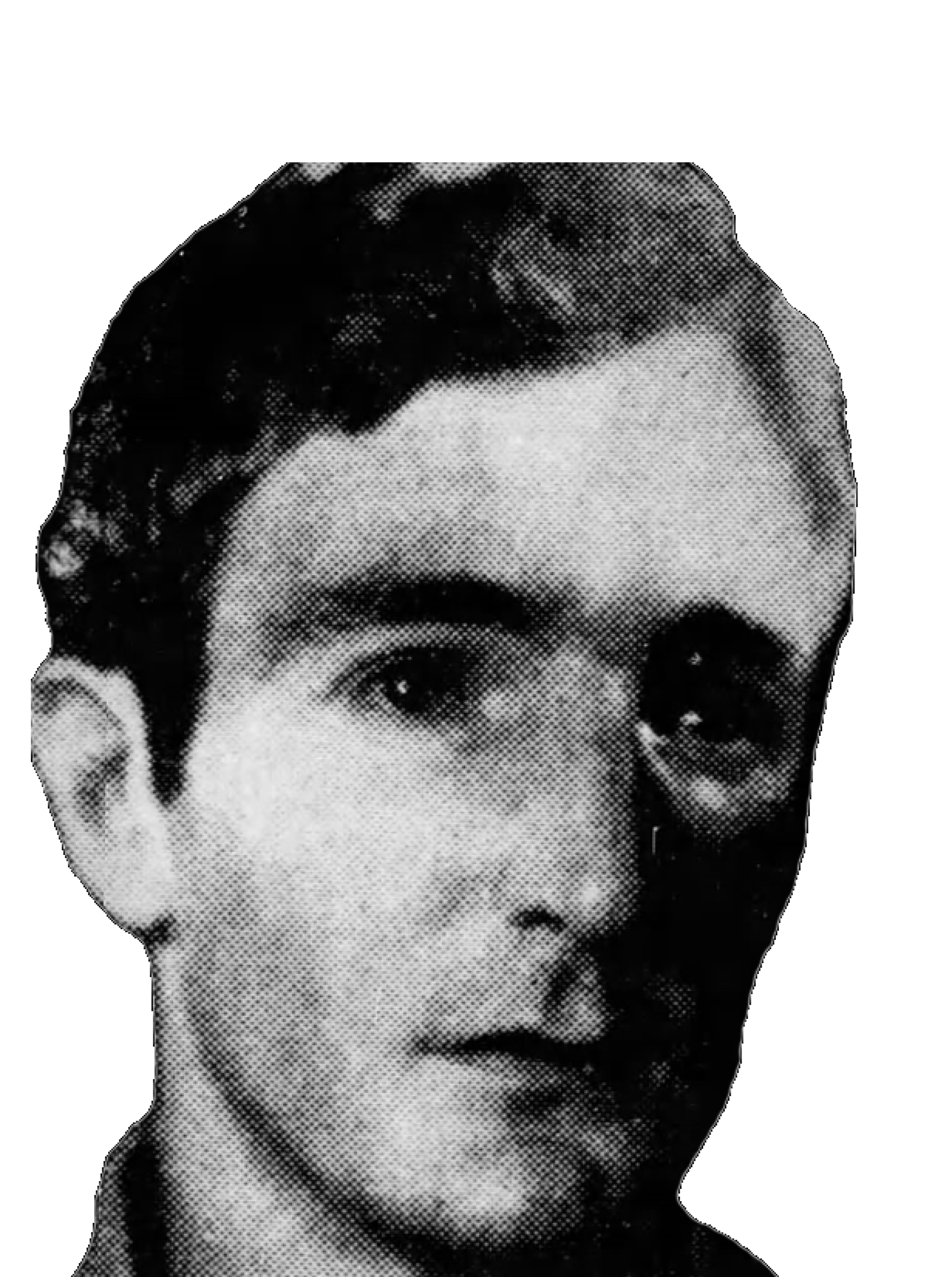
Tom Kromer was a prolific writer best known for his semi-autobiographical 1935 novel, “Waiting for Nothing.” Kromer’s work is heavily inspired from his experience with homelessness during the Great Depression.
Now, students studying digital humanities at Marshall University have developed an online archive of the forgotten work.
Kromer was born in 1906 in Huntington, where he studied journalism at what was then Marshall College.
“You didn’t know that an author, that papers at the time compared to Hemingway, lived here,” said Stefan Schöberlein, director of digital humanities at Marshall University, “There’s no marker to Kromer at his birthplace, no statue or sign for him anywhere in town, and no street bearing his name.”
Students designed the Tom Kromer Digital Archive in an effort to restore his visibility. Students put four variations of Waiting for Nothing in the archive, including a German translation, an annotated edition, and an audiobook.
Kristen Clark helped produce the Waiting for Nothing audiobook.
“The way the work is written it’s kind of like Kromer speaking to you about his experience,” she said. “Having somebody read it to you embodies that affect really well.“
The archive also features transcribed book reviews from the time the book was published, a student developed podcast, and virtual tour using the external history website, Clio.
Michael Martin said the Kromer Clio tour focuses on locations of personal significance to Kromer in New Mexico, Virginia, and West Virginia. Students chose locations like the Keith-Albee Theatre (now known as the Keith Albee Performing Arts Center) in Huntington, which relates to his time at Marshall. Martin said, “He had a small experiment for the journalism major that he wrote about, where he panhandled in that little area.”
During the early 20th century, Kromer was part of a growing American socialist movement. He spent time writing for socialist newspapers in Appalachia and around the rest of the United States.
“It was a great piece of culture to read about to really give the other side of the sentiments at the time, because of course, when you’re learning about the Cold War, you learn about America as being super anti communist, when in reality there was a huge movement,” Krys Smith explained.
Students working on the archive interviewed one of Kromer’s nephews, Steve Barnhill. Although Barnhill was young when he knew his uncle, he recalls that his family suspected Kromer of being a Russian spy.
Although Kromer’s work has a wider scope than Appalachia, Michael Martin says the influence is present.
“Kromer very specifically writes from a proletariat perspective,” Martin said. “It’s something that you wouldn’t get in a lot of other places that didn’t have the specific economic conditions Huntington had and still has.”
Despite students archiving a great deal of documents, many of Kromer’s writings are lost forever as a consequence of the Red Scare.
As an example, Schöberlein said, “his literary agent was Maxim Lieber, who was then accused of being a Soviet spy, so he fled the country and burned most of his correspondence.”
Despite the loss of historical documents, students are still optimistic about what they can find, as many documents are left to be discovered in the physical archives of newspapers and libraries, and private storage; what scholars refer to as The Great Unread. The students are looking to expand the Tom Kromer Digital Archive with more podcasts and more documents.
“Living history through this single man and his writings throughout the country was probably my favorite part about this whole experience,” Smith said.
Kromer is buried in Springhill Cemetery in Huntington, West Virginia.
You can find the Tom Kromer Digital Archive at kromerarchive.org.
Add WVPB as a preferred source on Google to see more from our team

The $26.5 million grant from the U.S. Department of Agriculture will help construct the West Virginia State University Agriculture Complex that will house laboratory space for the university, as well as the state Department of Agriculture.
Continue Reading Take Me to More NewsThey love West Virginia, but love alone may not be enough to keep them here. In the second of two Us & Them episodes, Trey Kay talks with young West Virginians who say they may need to leave in search of careers, community and a place where they can imagine their futures. Their decisions reveal what the Mountain State risks losing when young people cannot see a place for themselves at home.
Continue Reading Take Me to More NewsLast week, we aired the first part of an interview with a WVSU professor about what is AI. In the second part of that interview, we explore the best way to use AI to get what you want – while avoiding fabricated or false answers that seem real.
Continue Reading Take Me to More NewsHuntington is one of eight communities nationwide to be awarded a $3-million federal grant to strengthen efforts to help struggling residents.
Continue Reading Take Me to More News