8 W.Va. Sites Added To National Register Of Historic Places
Eight historic sites across West Virginia have been added to the National Register of Historic Places.
Continue Reading Take Me to More News




The 2026 WVPB PBS KIDS Writers Contest has begun! Submissions are due by March 31, 2026.
Find videos, resources and activities for teaching civic education in WV classrooms.

On Demand

On Demand

Watch locally produced documentaries & more.

On Demand

On Demand






West Virginia Morning

Inside Appalachia

West Virginia Week

Mountain Stage

Us & Them

The Legislature Today

The Legislature This Week

Send us your comments and questions.

Stream our board meetings.

Check out the latest WVPB news.

Sign up for our newsletter and get weekly updates.

Meet the WVPB staff.

WV Educational Broadcasting Authority, the WVPB Foundation, and the Friends of WVPB.

Come work with us!

Sponsor impactful and engaging media and entertainment.

Use your IRA to make a gift to WVPB.

Become a member with your gift of $1,000 or more.

Make WVPB part of your legacy.

Manage your membership account.

Learn how you can Protect and Sustain West Virginia Public Broadcasting.
 Courtesy
Updated on Friday, March 1, 2024 at 4 p.m.
In a statement, Kroger said: “We are disappointed that our offer was rejected by UFCW Local 400 members present during the vote. And we understand that our associates and customers are best served by the company and union returning to the bargaining table.
Thanks in large part to the involvement of U.S. Senator Joe Manchin and the Federal Mediation Conciliation Services, the parties will resume contract negotiations and we are pleased to do so. The company and union will meet to continue discussions toward finding common ground on areas of concern.
We are hopeful that we can work together to reach a fully recommended tentative agreement that is a win for associates and helps to keep groceries affordable for the communities we serve.”
Updated on Friday, March 1, 2024 at 3 p.m.
United Food & Commercial Workers Local 400 Union announced at 2:30 p.m. Friday that it will resume talks with the company “in hopes of reaching an agreement.” The union also plans to hold a series of rallies at select stores on March 11 where they will announce the next steps they plan to take.
The union said, for now, they will continue to work as normal and all Kroger stores in the three-state area will remain open.
Original Story
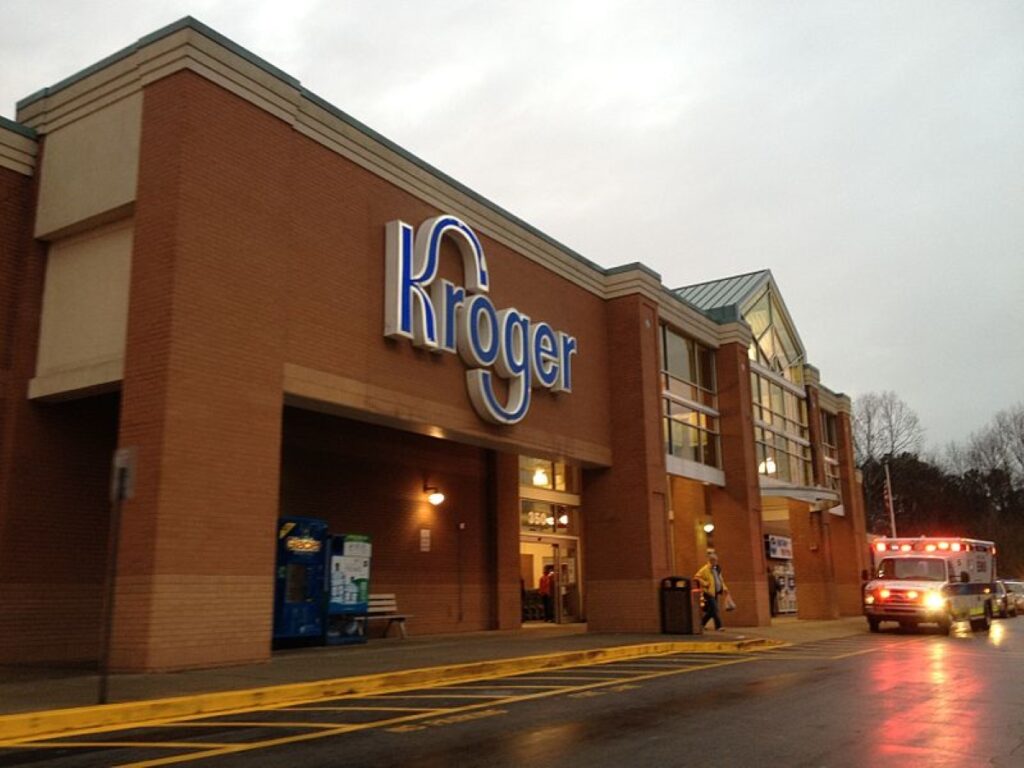
Workers at 38 Kroger grocery stores in West Virginia, Kentucky and Ohio have voted to go on strike. Whether they do or not is dependent on further negotiations with the company.
United Food & Commercial Workers Local 400 Union announced Friday that Kroger union members have voted in favor of authorizing a strike. The union is cautious to say they are not on strike yet, but the bargaining committee can call a strike at any moment.
Employees in select stores voted 1,375–214 (87 percent) to reject the company’s contract proposal and 1,347–229 (85 percent) to authorize a strike.
“This vote has sent a powerful message to Kroger that they must do better if they expect us to ratify a contract,” explained the union’s bargaining committee in its announcement to members. “Now, we are ready to sit down with the company and negotiate an agreement that we can recommend for ratification. If not, we are ready to continue to do whatever it takes to get a fair contract. By sticking together, we will win.”
If it takes place, the strike would involve approximately 3,000 workers.
In a statement, the Kroger company said that Kroger Mid-Atlantic stores in the three states are open for business and serving customers despite UFCW Local 400’s announcement of a strike authorization.
“Despite our proposed historical investment of $300 million in associate wages and health care in West Virginia, our offer was not ratified. Our associates are the heart of Kroger, and we respect and value their hard work,” said Lori Raya, Kroger Mid-Atlantic division president. “Our proposal would put more money in every associate’s paycheck and preserve high-quality healthcare at 72 percent less than the average healthcare expense for West Virginia families. We remain dedicated to finding common ground and extend an open invitation to UFCW Local 400 for further dialogue.”
U.S. Sen. Joe Manchin, D-W.Va., issued a statement on the social media platform X, formerly known as Twitter, that: “I greatly value the diligent work every Kroger team member performs in West Virginia and the indispensable role Kroger stores and their employees fill in our communities. I encourage all parties to come back to the negotiating table as soon as possible to preserve jobs and benefits and keep these essential stories operational and thriving.”
The Mid-Atlantic Division operates more than 100 stores in Virginia, West Virginia, Kentucky, Tennessee and Ohio. Based in Richmond, Virginia, the Mid-Atlantic Division employs about 15,000 associates.
United Food & Commercial Workers Local 400 is led by President Mark Federici and represents 35,000 members working in the grocery, retail, health care, food processing, service and other industries in Maryland, Virginia, Washington, D.C., West Virginia, Ohio, Kentucky and Tennessee.
The regional stores included in the potential collective bargaining agreement include:
West Virginia:
Ohio:
Kentucky:
We hear from Senate President Randy Smith who in last week's episode of The Legislature Today discussed his goals for supporting small businesses in the state. Also, the Appalachia + Mid-South Newsroom examines how cold can affect your body.
Continue Reading Take Me to More NewsBetter known as VITA, the community-based program offers professional, nonprofit-supported tax preparation at no cost in communities across America.
Continue Reading Take Me to More NewsMettiki Coal in Davis, West Virginia has issued a Worker Adjustment and Retraining Notification (WARN) Notice for the Mountain View Mine saying it plans to lay off all its employees and cease operations.
Continue Reading Take Me to More NewsFidelis New Energy and 8090 Industries announced the Monarch Compute Campus development in Mason County. When it is fully operational, Monarch is expected to generate 8 gigawatts of power using natural gas.
Continue Reading Take Me to More News