Alert (09/10/2026): Our Parkersburg TV transmitter is undergoing maintenance for a few days and will not be operational. We apologize for any inconvenience.
All our programming is available via our TV livestreams on our website and WVPB Passport. Thank you for your patience!
This week, one thing about Appalachians: we can get competitive. We’re proud of our local food. Love a good hunt. And enjoy competition with friends. We learn the rules and celebrate our victories. You'll hear these stories and more this week, Inside Appalachia.
Foster Care Farm Fights Food Insecurity, Teaches Trade Skills
Listen
Share this Article
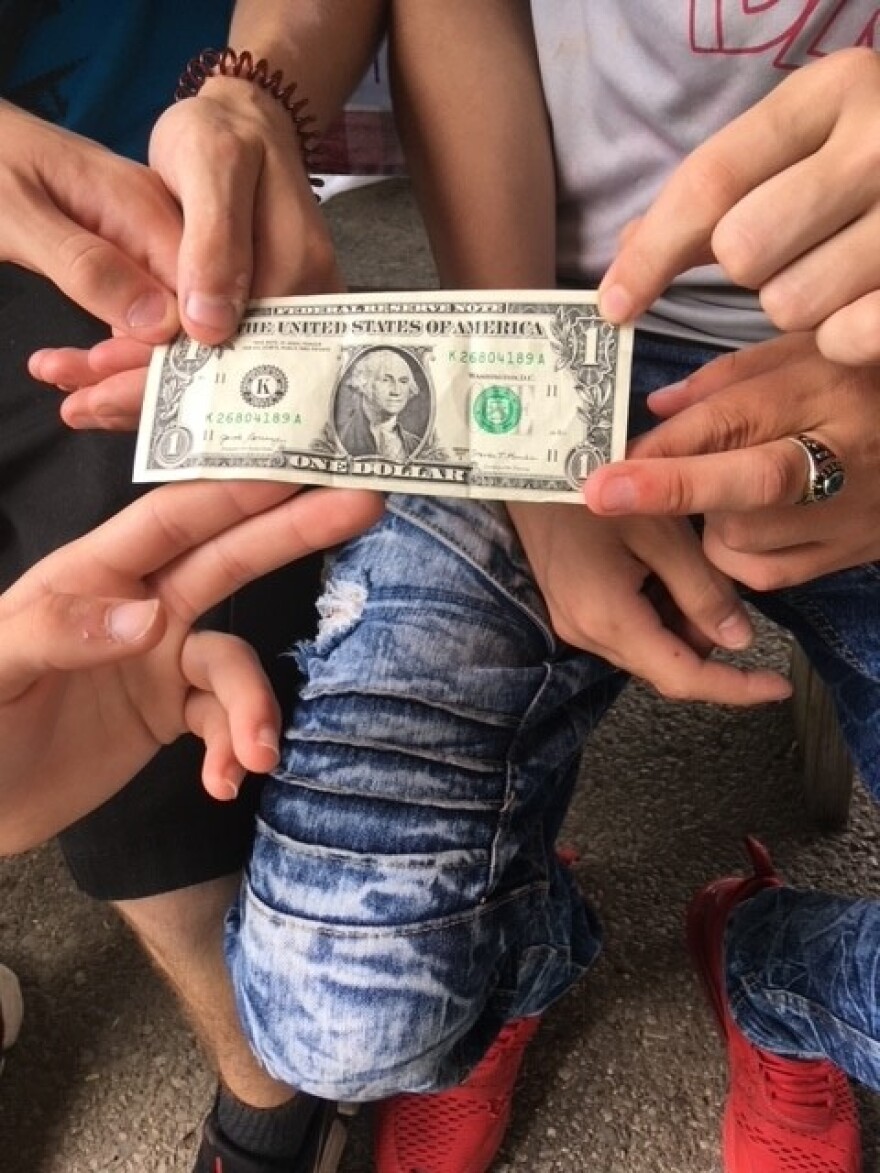
After loading up their crops and setting up a stand at the Ceredo Farmer’s Market, youth from the Stepping Stones Residential Treatment Facility sold their first $100 dollars of produce that they grew on their commercial farm, Growing Hope.
Stepping Stones Residential Treatment Facility
First dollar earned by Growing Hope
Located in Lavalette, West Virginia, Stepping Stones is a child welfare and behavioral health provider for Cabell and Wayne County. The program helps young adults in the foster care system transition into adulthood.
Many Appalachian youth who age out of the foster care system fall into homelessness or substance use disorders. According to Susan Fry, the director of Stepping Stones, transitioning from foster care is harder when the children don’t have trade skills or access to education.
“You can’t go out and be a productive member of society if you haven’t had the opportunity,” Fry said. “Whether it be through a university, a community college, or trade so that they can achieve employment that pays a livable wage.”
It doesn’t help that some of these youth are transitioning into a food insecure community. The closest grocery store for rural Lavalette is a 20 minute drive to Huntington.
The Growing Hope farm began in partnership with Green Bronx Machine, a New York City based nonprofit that teaches children about agriculture and science while creating sustainable sources of employment and nutrition for underdeveloped communities.
“The same economic hardships, the same lack of education opportunities, the same nutrition and health disparities that face the young men in Appalachia are precisely what are facing young men and young children here in the South Bronx,” the CEO of Green Bronx Machine, Stephen Ritz, said.
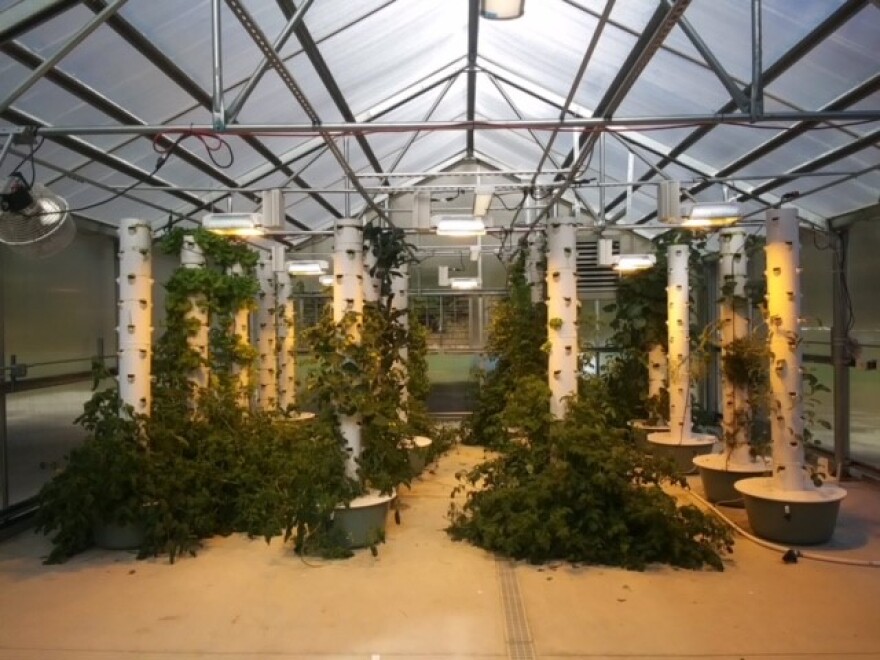
Growing Hope uses aeroponic tower gardens to grow plants like cucumbers, peppers, eggplants, and a wide variety of leafy greens and herbs. Aeroponics is a process of growing crops without soil, which allows plants to be grown year-round.
According to Ritz, the skill to operate an aeroponic farm is a trade skill that is uncommon throughout Appalachia.
“Growing food in Appalachia, as these young men are learning, is a license to print money,” Ritz said. “I’ve met a lot of kids who are allergic to vegetables, but I’ve never met a young man who’s allergic to money.”
Stepping Stones is also building a community of tiny houses for young adults from foster care to have a place to rent. The tiny homes will act as a place where foster youth can have a personal space, while still being part of a larger community.
“Young people in foster care, especially in residential treatment, they’ve never even had a room by themselves, let alone their own home,” Fry said. “To be able to have a home that is theirs, that they’re paying rent on, that they decide how they want to change the decorations and set it up, and not to have all those roommate issues.”
According to Fry, giving less restrictions and more opportunities to these young adults allow them more freedom to grow into themselves.
“We want to, at least by the time they’re age 17, be able to get them in a less restrictive living situation, and give them more control over their decisions. ”
Stepping Stones Residential Treatment Facility
Stepping Stone’s tiny homes
Stepping Stones is looking at their program as a model that can be adapted for other communities.
“We’re very rural, and what would work with us where we don’t have zoning may not work in Charleston, but the structure of the model; the community wrapping their arms around these kids in foster care, that can apply anywhere in the world,” Fry said.
The foster youth employees with Growing Hope are looking to expand from selling at the farmer’s market toward selling to individuals and restaurants.
Add WVPB as a preferred source on Google to see more from our team
Twenty-five years ago, on Sept. 11, 2001, at 8:46 a.m., a hijacked plane hit one of the twin towers at the World Trade Center in New York City, ending for this nation a certain innocence, and the belief that such an attack would never happen on American soil. Maria Young caught up an economics professor from WVU who was on site when the planes hit – and gave an exclusive interview to then-West Virginia Public Broadcasting News Director Beth Vorhees.
They love West Virginia. They want to make their future here, but jobs, housing and opportunity can make that choice harder than it sounds. In the first of two Us & Them episodes, Trey Kay talks with young West Virginians trying to decide whether they can put down their own roots in a place they call home.
Economic growth in West Virginia ranks close to the bottom in national rankings. It’s not just losing jobs, it’s also losing young people. In the first of two new Us & Them episodes, host Trey Kay talks with several young adults from the Mountain State asking whether they will stay put or find their future elsewhere.
Anthropic, creator of Claude AI, has agreed to spend $45 billion over six years for computing capacity at the Monarch Compute Campus north of Point Pleasant.