


Aluminum Plates For Deep Space Win W.Va. 'Coolest' Contest
Aluminum plates that helped keep astronauts on the Artemis II rocket safe won the first ever Coolest Thing Made In West Virginia competition.
Continue Reading Take Me to More NewsAlert (09/29/2026): Our Parkersburg TV transmitter is still undergoing maintenance and remains temporarily inoperative. We apologize for the inconvenience.
All our programming is available via our TV livestreams on our website and WVPB Passport. Thank you for your patience!




To Educate, Inform, and Inspire by Telling West Virginia's Story
Mountain Readers Week will be held Oct. 5-9, 2026! Celebrate and foster a love of reading in children across West Virginia.
Nominate an exceptional West Virginia K-12 teacher today!

On Demand

On Demand

Stream original productions from WVPB

Watch locally produced documentaries & more.

On Demand

On Demand






West Virginia Morning

Inside Appalachia

West Virginia Week

Mountain Stage

Us & Them

The Legislature Today

The Legislature This Week

Send us your comments and questions.

Stream our board meetings.

Check out the latest WVPB news.

Sign up for our newsletter and get weekly updates.

Meet the WVPB staff.

WV Educational Broadcasting Commission, the WVPB Foundation, and the Friends of WVPB.

Come work with us!

Read our annual report and learn how we educate, inform and inspire with your support.

Sponsor impactful and engaging media and entertainment.

Use your IRA to make a gift to WVPB.

Become a member with your gift of $1,000 or more.

Make WVPB part of your legacy.

Manage your membership account.

Learn how you can Protect and Sustain West Virginia Public Broadcasting.
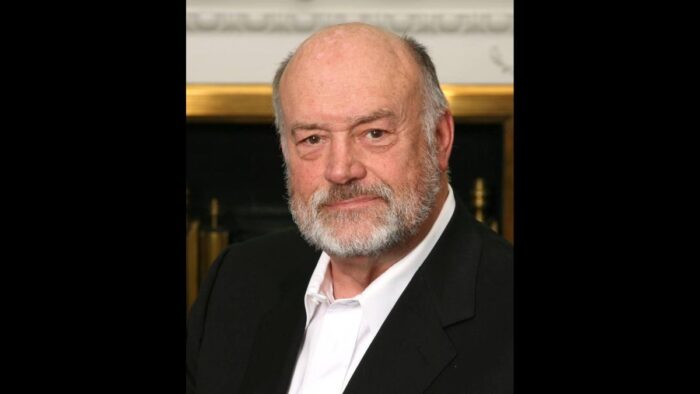
Ed Rabel was born in Kanawha County and grew up in St. Albans before a career in journalism took him to war zones and locations around the world.
Rabel graduated from St. Albans High School in 1957 and then Morris Harvey College in 1963. He worked in local radio before becoming news director of WCHS-TV in Charleston.
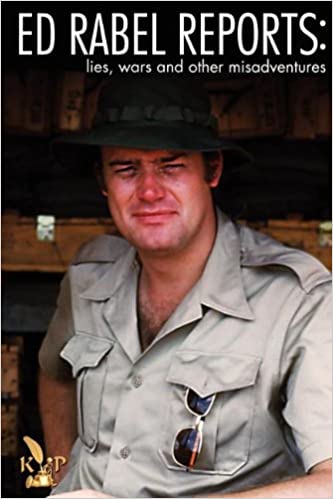
He joined CBS News in 1966. He was the last reporter to interview the Rev. Dr. Martin Luther King, Jr. the day before he was assassinated in 1968 and volunteered to cover Vietnam in 1969. He also published the memoir “Ed Rabel Reports: Lies, Wars and Other Misadventures.”
Rabel’s attorney Timothy Koontz confirmed Rabel died on Dec. 3. He was 86 years old. Koontz said Rabel was someone who didn’t suffer fools gladly, but he spoke in the highest terms of what he called Rabel’s second career — teaching.
After retiring from broadcasting as a national correspondent with NBC News, he returned home to Alum Creek. He was an adjunct professor of journalism at the Edward R. Murrow College of Communications at Washington State University.
In 2014, he ran as an independent for Congress, but lost in the general election.
Rabel was a regular columnist for the Charleston Gazette-Mail, occasionally stirring up local reactions, like when he declared there was no reason to watch local television news.
Since 2019, he has worked as a substitute teacher in West Virginia and in Virginia, where he died.
Add WVPB as a preferred source on Google to see more from our team

Aluminum plates that helped keep astronauts on the Artemis II rocket safe won the first ever Coolest Thing Made In West Virginia competition.
Continue Reading Take Me to More NewsFor LGBTQ youth in Appalachia, estrangement from their families of origin can be a common and heartbreaking experience. So, some LGBTQ people rely on “chosen family." In Roanoke, Virginia, the culture of ballroom offers the safety and stability of family, along with traditions that are handed down — traditions like vogueing. Mason Adams reported this Folkways story, in collaboration with Brad Kutner and Kelley Libby.
Continue Reading Take Me to More NewsMountain Stage is changing locations for its final two live events of 2026. The Sunday, Nov. 15 show will now take place at the Charleston Theater at the Convention Center, and the Sunday, Dec. 6 show will be held at the Capitol Theater in Downtown Charleston.
Continue Reading Take Me to More NewsDuring spooky season, popular attention turns toward ghosts and goblins – or if you live in Appalachia – cryptids. For the Appalachia + Mid-South Newsroom, Bill Lynch, producer of Inside Appalachia, brings us the story of the Flatwoods Monster.
Continue Reading Take Me to More News