Alert (09/29/2026): Our Parkersburg TV transmitter is still undergoing maintenance and remains temporarily inoperative. We apologize for the inconvenience.
All our programming is available via our TV livestreams on our website and WVPB Passport. Thank you for your patience!
This week, ballroom culture offers LBGTQ folks a chance to be as fabulous as they want to be. Also, national media reports on the deaths of notable people, but small, hometown papers add a more personal touch. And, alpha-gal syndrome takes red meat off the menu, but what about ostrich?
There are many folklores and charms when it comes to getting lucky in Appalachia. It’s been said that it’s bad luck to eat lettuce on a hot summer day. People also believe that placing parsley seeds on a fence post and allowing the wind to blow it off to sow it will clear them of any bad luck.
But, the most famous good luck charm in the world has got to be the four-leaf clover. One old mountain lore is that a green salve of four-leaf clovers rubbed over your whole body is said to make you invisible but you cant miss even one wrinkle.
Chuck Kleine
/
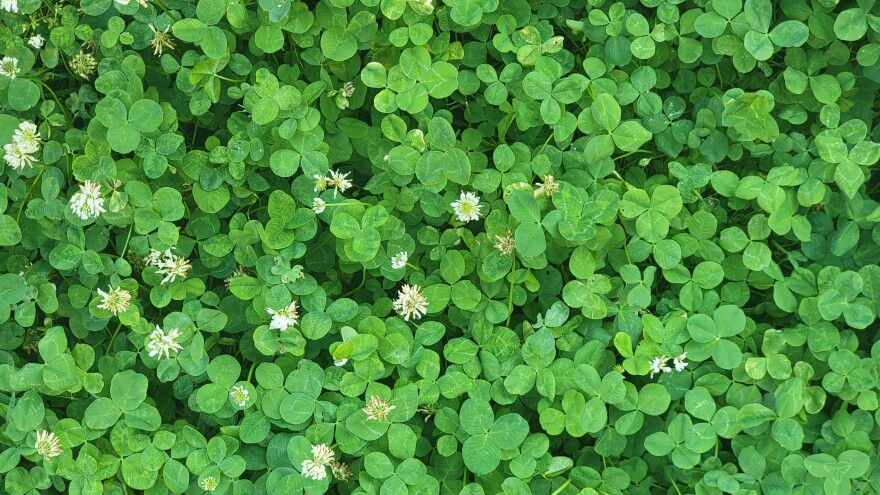
Can you find the four-leaf clover in this picture?
Red clover and white clover are the most common types of the plant we see in West Virginia.
Neither of them are native to the area and are considered one of the earliest plants brought by Europeans. Both red and white clover are edible and are often used like spinach in a salad.
Some folks use the flowers to make a clover jelly or steep them in water to make tea. The leaves of thye red clover can also be dried and used as a vanilla extract substitute.
There are a few native clover in West Virginia. The native Running Buffalo Clover has recently been removed from the endangered species list. Kate’s Mountain Clover is another native species, it is rare to find and stunning when in bloom.
Take some time to glance down at the next clover patch you see and have a closer look. The flowers are just beautiful, and maybe you’ll even find some luck hidden under your feet.
EDIBLE MOUNTAIN – Clovers
Add WVPB as a preferred source on Google to see more from our team
This week, ballroom culture offers LBGTQ folks a chance to be as fabulous as they want to be. Also, national media reports on the deaths of notable people, but small, hometown papers add a more personal touch. And, alpha-gal syndrome takes red meat off the menu, but what about ostrich?
Local leaders continue to promote the state's aviation industry as the country continues to face a shortage of specialized workers including mechanics, technicians and air traffic controllers.
A specific style of ballroom dance is helping disenfranchised young people find community in Appalachia. In our latest episode of Inside Appalachia, we explore LGBTQ ballroom culture and community in Roanoke, Virginia. Mason Adams has this excerpt.
Steel stairs lead to the top of the Red Oak Fire Tower where there's a 14-foot square cabin with panoramic windows and a metal catwalk. There's electricity, but no water.