Alert (March 14, 2026): Due to recent high winds, our radio/TV tower in Bethany is not operational. Our engineers are working to resolve the issue. Alert (March 11, 2026): Our TV translator in Flatwoods is experiencing technical issues. Our engineers are troubleshooting the problem and expect it to be down for a couple days.
Thank you for your patience.
We speak with Ron Flanary, co-author of "Big Emma," a book that explores the story of a powerful steam locomotive that hauled passengers, freight and coal in eastern Kentucky. Also, state officials want to keep the public informed about the launch of new rural health programs.
Four Things to Know as the Blankenship Trial Wraps Up
Share this Article
As jurors begin to deliberate a verdict in the trial of former Massey Energy CEO Don Blankenship, all eyes in West Virginia turn to Charleston.
More than six weeks after the trial began on Oct. 1, jurors will weigh testimony and evidence on whether Blankenship conspired to violate federal mine safety standards and lied to investors about the safety record of his company following the April 2010 Upper Big Branch mine disaster.
Here are four things to know as the trial comes to a close and jurors deliberate on a verdict:
1. The charges: Explained.
Blankenship was originally indicted in November 2014 by federal prosecutors on four counts. Two of the charges were streamlined together in March 2015 and the total was reduced to three.
The charges against Blankenship are:
Conspiracy to willfully violate mandatory federal mine safety standards or to defraud the United States
Knowingly and willfully making or causing to be made a materially false, fictitious, or fraudulent statement related to a material matter within the jurisdiction of the Securities and Exchange Commission
Willfully, knowingly, and with the intent to defraud making or causing to be made untrue statements of material fact or omissions of material fact in connection with the sale or purchase of securities
If convicted on all charges, Blankenship faces 30 years in prison. He has maintained his innocent since the charges were filed. It should also be noted that Blankenship is not charged in the death of the 29 miners at Upper Big Branch.
2. The defense called no witnesses.
In a surprise move Monday morning, Blankenship’s defense team rested its case without calling a single witness. Former assistant U.S. Attorney for the Southern District of West Virginia and Charleston attorney Mike Hissam called the strategy “highly unusual” but also said it might allow them to go “on the offensive” in attacking the government’s case.
Credit Dave Mistich / West Virginia Public Broadcasting
/
West Virginia Public Broadcasting
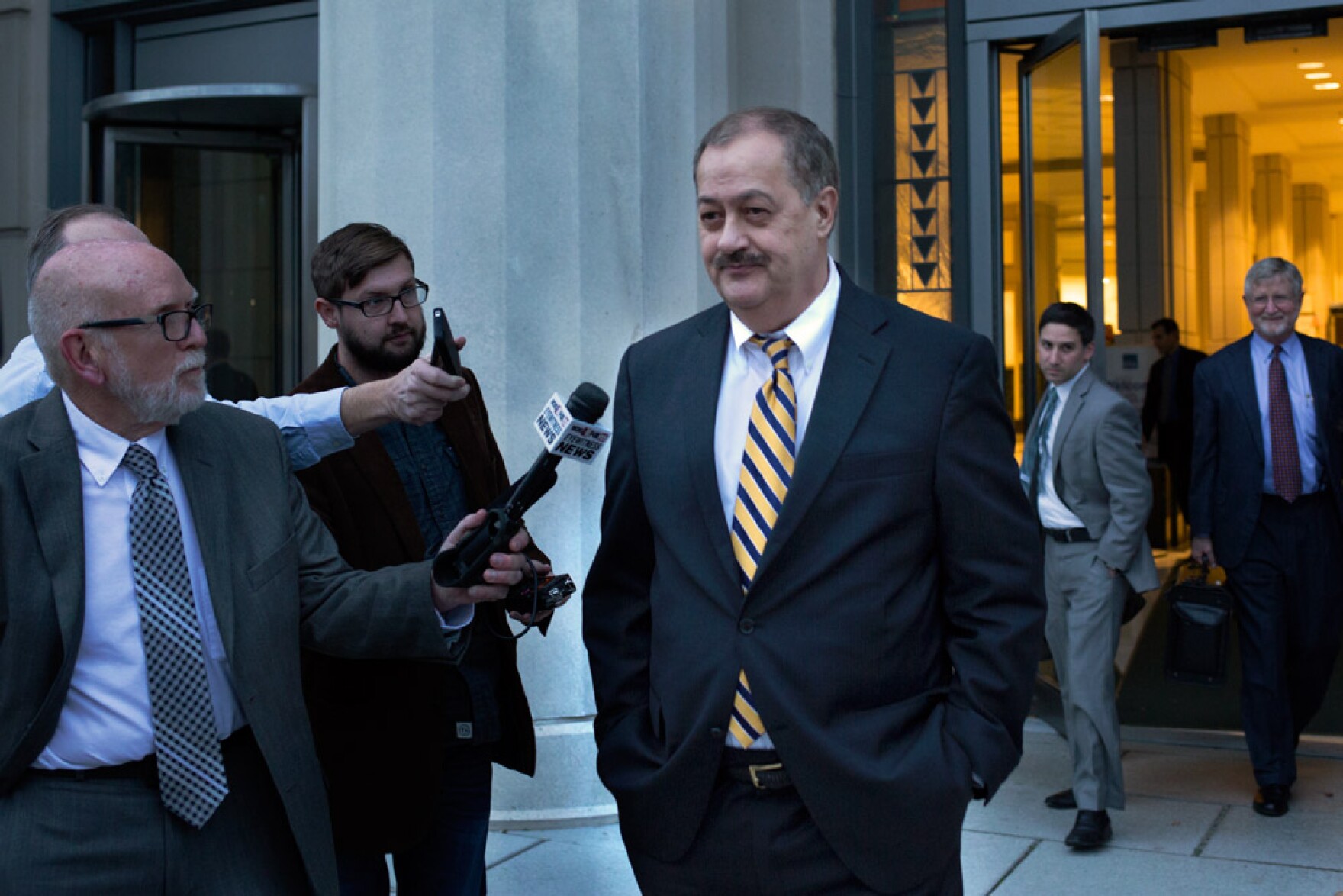
Don Blankenship leaves the Charleston federal courthouse on October 1, 2015 for a lunch amidst a break during jury selection.
3. The prosecution’s witnesses were wide-ranging.
Prosecutors called 27 witnesses over the course of 24 days of testimony. Witnesses included FBI special agent James Lafferty, former Massey safety specialist Bill Ross, former Performance Coal Company operator (the Massey-owned company that was responsible for the Upper Big Branch mine) Chris Blanchard and miners who worked at the Upper Big Branch mine.
4. A key witness for the prosecution spent days on the stand.
Chris Blanchard took the stand for the prosecution under an immunity agreement with the government. However, Blanchard’s testimony was a surprise to the prosecution when Blankenship’s defense team questioned him during cross examination.
According to an Oct. 30 report from the Associated Press, Assistant U.S. Attorney Steven Ruby told Judge Irene Berger: “Much of what the witness said in [cross-examination] was a surprise to the United States.”
In a second line of questioning, Ruby asked Blanchard to double-check his 2014 grand jury testimony.
The defense entered a motion to also question Blanchard a second time, although Judge Berger denied that request.
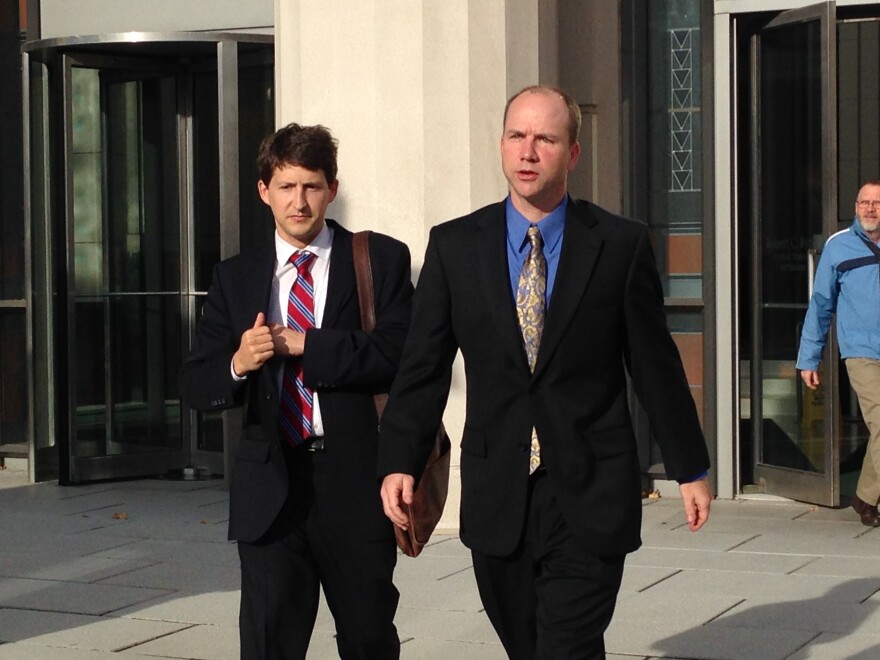
Credit Ashton Marra / West Virginia Public Broadcasting
/
West Virginia Public Broadcasting
Add WVPB as a preferred source on Google to see more from our team
A tech company that builds and operates the infrastructure needed for artificial intelligence development, is setting up shop on the 2,200 acre Monarch Compute Campus in Mason County, where it plans to build and operate an advanced AI data center powered by a microgrid that will begin operation by late 2027.
We speak with Ron Flanary, co-author of "Big Emma," a book that explores the story of a powerful steam locomotive that hauled passengers, freight and coal in eastern Kentucky. Also, state officials want to keep the public informed about the launch of new rural health programs.
Gov. Patrick Morrisey has promoted the program as a unique opportunity to improve health outcomes and expand access to care since it was first announced last year.
In his first press conference since the end of the 2026 legislative session, Gov. Patrick Morrisey chose to focus on the successes of his priorities -- and goals ahead.