Alert (09/29/2026): Our Parkersburg TV transmitter is still undergoing maintenance and remains temporarily inoperative. We apologize for the inconvenience.
All our programming is available via our TV livestreams on our website and WVPB Passport. Thank you for your patience!
This week, author Silas House returns with a sweeping new novel. Also, some folks say, you have to fake it 'til you make it, even if you're trying to establish a state park. And, the story of the first Mothman sightings as written by a small town journalist in 1966.
From Nashville to Nitro: Tony Harrah Sings the Blues
Listen
Share this Article
“There’s another generation [of blues players] coming up… if the flames are stoked well and kept alive. “
From West Virginia Public Broadcasting and A Change of Tune, this is 30 Days of #WVmusic, the interview series celebrating the folks who make the West Virginia music scene wild and wonderful.
And today’s interview is with a gravelly-bluesy singer-songwriter who has dipped a foot in the musical waters of Nashville and Nitro, West Virginia. This… is Tony Harrah.
I wanted to be a musician since I was little, back when Kroger’s used to sell VHS and albums when you’d walk right through the door in Teays Valley. I went in there and Prince’s Purple Rain stared me right in the face in the mid-‘80s. And that’s when I realized… that’s what I wanted to do.
So at one point in grade school, I crafted this whole rock star outfit complete with guitar with rubber band strings. When all the kids were getting ready at their desks, I went back and got dressed up and came out, and they all laughed at me. But I thought they were laughing with me.
I took piano lessons when I was a kid. By the time I was a teenager, I got a guitar and did angry youth banging out of Nirvana covers [laughing]. I wanted to start my first blues band when I was 19, but I didn’t see at the time how short-sided that was. You really don’t have much to be blue about when you’re 19, not really anything anyone can sink their teeth into. That didn’t really go anywhere.
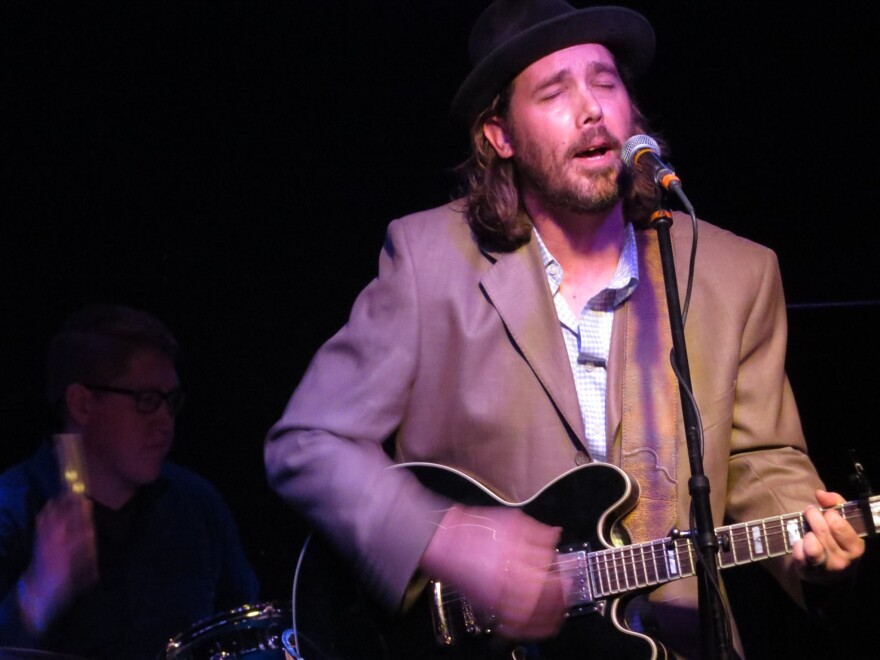
Credit Marybeth Hannah
/
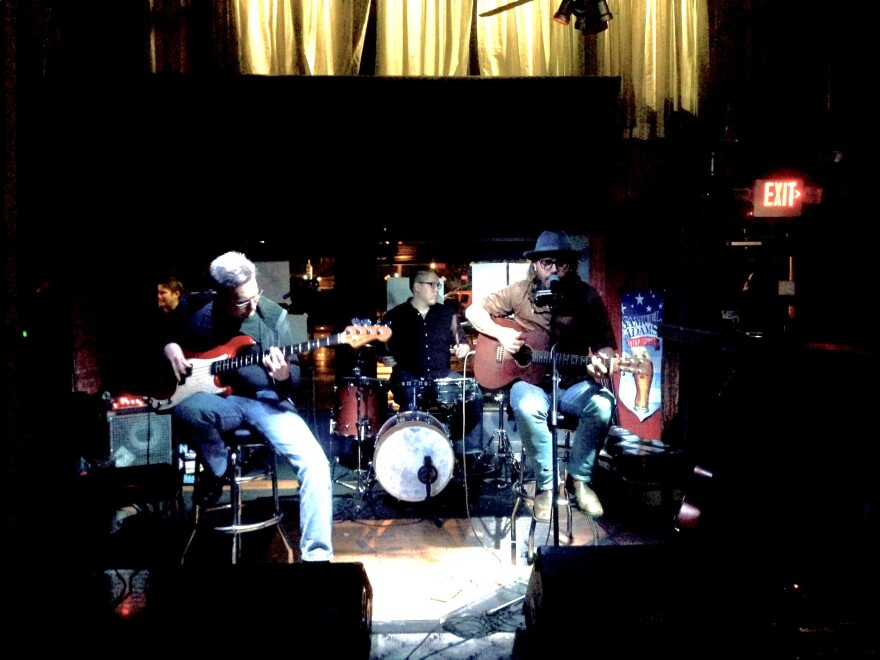
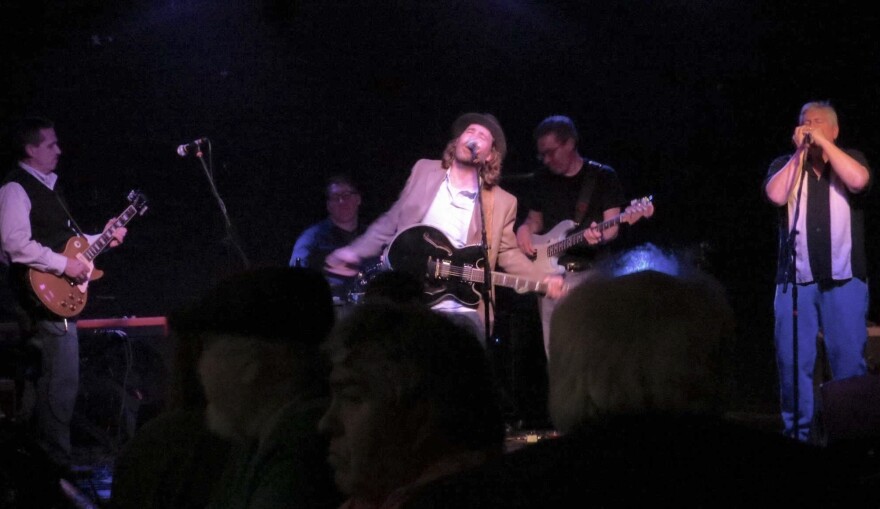
Tony Harrah performing at the Boulevard Tavern in Charleston, WV.
On playing the blues:
My biggest influence is probably Muddy Waters. I found him when I was 16, and I was really taken by that. I got really into James Cotton, and I found out he was the harmonica player on Muddy’s last record. It wasn’t until I really got older that I started seeking out Lightnin’ Hopkins and some of the blues folks that aren’t as popular as the “name your top five” favorites.
I found Tom Waits in my early twenties. At the time, I wasn’t interested in him. I was never a singer, and I never sang. But when I began singing, I was like, “Man, I’ve got a gravelly voice. I think I’ve got soul, I guess.” I figured if Tom Waits has that same range, I could get by with it, so he became a big influence. He has no fear to do anything.
Credit Jon Rickman
/
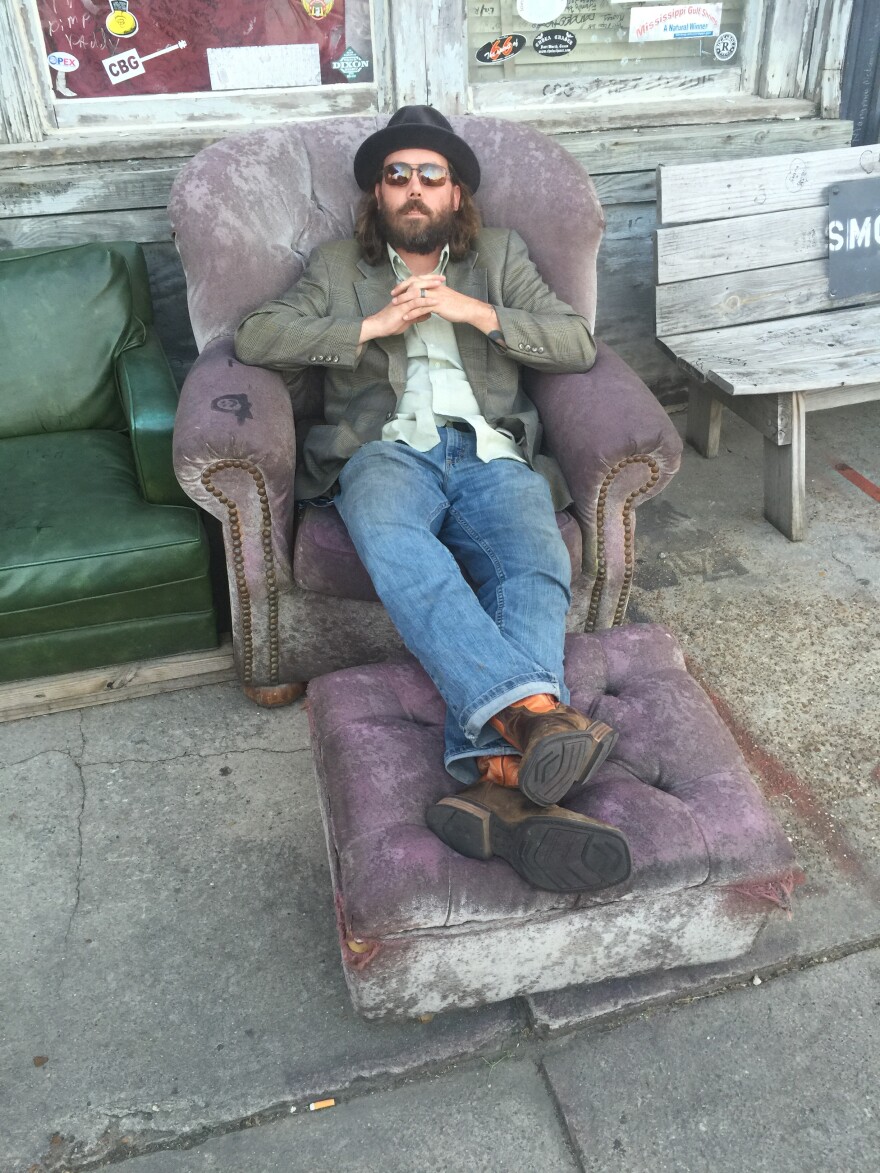
Tony Harrah
Blues music is kind of like country to the effect that I really like that its simple, and it tells a really good story. I wanted to get back into blues and stay there, but the problem with that is I’m not a really good guitar player. When you play blues, you’re either the guitar virtuoso that sings, or you’ve got a backing band, so I do a lot of stuff on slide guitar or resonator. When I play Americana, the guitar playing isn’t much of an issue. But it’s all a version of the blues, whether its country, Americana or whatever.
I was reading a book called Why It Hurts So Good about the history of the blues. The blues was once very popular in the South, predominantly black music. But it’s flip-flopped, and they were showing the statistics: now it’s like 90% white and 89% over the age of 50. So there is some concern that there’s a dying out of it, but when I was at the Memphis International Showcase this past year, you wouldn’t believe how many young kids were there. Some of it was, “Oh, that’s cool,” and some of it was, “Wow. This is really good,” and some of it blew us away.
Credit Jon Rickman
/
Tony Harrah
On moving down to Nashville for some time before returning to West Virginia:
We were playing a lot in Huntington in the mid-2000’s. We did well there, but around the time American Minor had moved from West Virginia, it gave me the idea that if you want to do something, you’ve got to leave here. So in 2004, we thought about it and packed up and moved down there. We got a house and all lived in the house together. We played some down there. You think it’s the land of milk and money, but there’s a lot of people down there looking for the same opportunities as you are. It taught me a lot about the music industry, and it taught me I didn’t know anything about it when I moved there.
It’s not always bad being a big fish in a small pond. I realized that you need a reason to move there, and at the time social media hadn’t arrived and being able to record on your own wasn’t affordable. By the time I left, I thought, “I don’t need to be here.” Networking as a young artist, you think your music will stand for itself. Having a great record will fail without the right publicity. Getting to know the right people is where you get your ins-and-outs.
Music featured in this #WVmusic chat:
Tony Harrah and the Putnam Prohibition- “Port of Call”
Tony Harrah and the Putnam Prohibition- “Hard Times”
Tony Harrah and the Putnam Prohibition- “Simple Times”
Support for 30 Days of #WVmusic is provided by Kin Ship Goods, proud supporter of DIY music and the arts. Locally shipped worldwide at kinshipgoods.com.
Add WVPB as a preferred source on Google to see more from our team
On Oct. 23, Grammy Award-winning composer and conductor, Eric Whitacre, will release a new album for choir, cello, piano and live electronics called Eternity in an Hour via Decca Records. Listen to the entire interview between Whitacre and Matt Jackfert.
On this week's premiere broadcast of Mountain Stage, host Kathy Mattea welcomes The Jayhawks, Tift Merritt, Tanasi, and Candi Jenkins to the Culture Center Theater in Charleston, WV.
Appalachia, and the entire world, really, was shaken by the passing of Dolly Parton. Dolly — everyone called her Dolly — was a Tennessee native, country and pop music singer, and philanthropist who invested heavily in people – especially here in Appalachia. And in children’s literacy through her Imagination Library, which provides free books to young kids. To a lot of people, she was Appalachia. To mark her passing, Inside Appalachia Host Mason Adams spoke with Ted Olson, a country music historian at East Tennessee State University’s Department for Appalachian Studies.
On this week’s encore broadcast of Mountain Stage, host Kathy Mattea welcomes Russell Moore & IIIrd Tyme Out, Jack Blocker, Cole Quest & The City Pickers, Courtney Hartman, and The Critton Hollow String Band.