Alert (09/29/2026): Our Parkersburg TV transmitter is still undergoing maintenance and remains temporarily inoperative. We apologize for the inconvenience.
All our programming is available via our TV livestreams on our website and WVPB Passport. Thank you for your patience!
This week, Barbara Kingsolver’s new novel takes on issues of class and classical music. Also, kudzu warriors band together to fend off invasive plants and take back the land. And, it’s pawpaw season, but a new bug could be harming the trees.
Home » Stories » Emotional Healing From Floods Can Take Just as Long as Rebuilding
Published
Emotional Healing From Floods Can Take Just as Long as Rebuilding
Listen
Share this Article
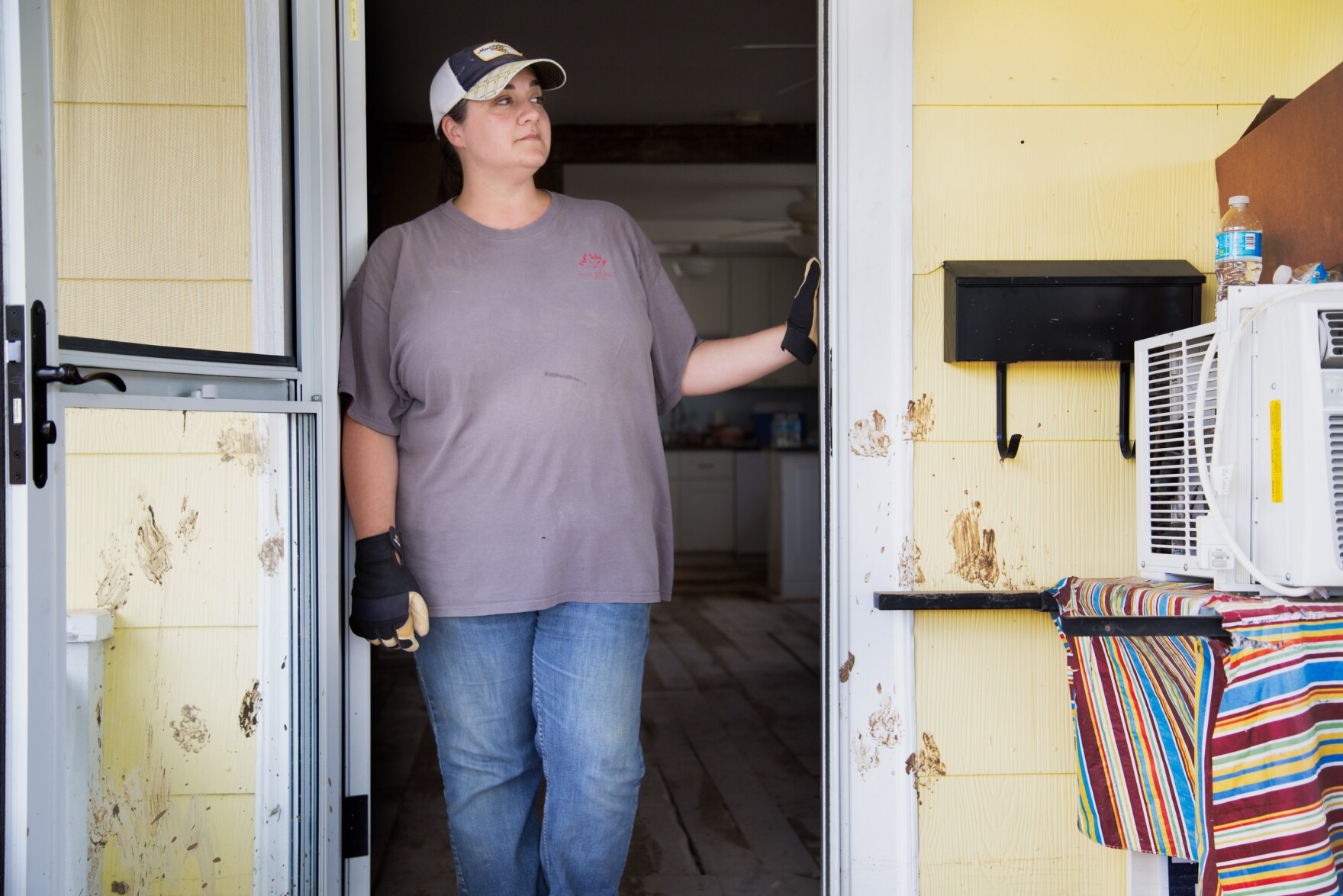
Rachel Taylor stands on the front porch of her little yellow house in White Sulphur Springs. The front door is pasted with paw prints where her dog tried to get in during the flood.
Across the street, nestled between two battered houses, is an empty lot marked by a cross with an array of flowers and photos. It’s a memorial for a family washed away by the flood.
The dog? He survived the flood and is now with family in Kentucky. Taylor’s across-the-street neighbors, the Nicelys, did not.
“When I start feeling overwhelmed with this, I just look across the street at that memorial and I think, there’s nothing that we have lost that can’t be replaced or mended,” she said.
Taylor gestured at her gutted living room. She and her husband spent seven years renovating this 1930s Craftsman house, room by room. They were just about done with renovations when their house was flooded a few weeks ago.
“You know, the first couple of days it was very intense. It was kind of crisis mode. Maybe that’s the way I would describe it, because you didn’t really have time to think about it and process it,” said Taylor.
Once the full extent of the damage set in, Taylor said she developed severe nausea and carsickness to the point of not being able to drive.
Credit Kara Lofton / West Virginia Public Broadcasting
/
West Virginia Public Broadcasting
A memorial for the Nicely’s sits across the street from Rachel Taylor’s White Sulphur Springs home.
“Talking to different people, they said, ‘That’s probably your nerves – you know, the stress level.’ You don’t realize your body is just having a response to this, [which] isn’t normal for you,” she said.
Taylor has flood insurance that will allow her to rebuild, but she said her family will likely move out of the neighborhood once the home is restored or ready for sale.
“I think the words we use when we talk about it are ‘I don’t know if I have it in me,’ ‘I’m not sure if I can do it again,’ things like that. And then we just say, ‘Well, we’ll take it one day at a time.’”
Experts say this kind of response is normal following natural disasters.
“It’s a physical aspect of the stress response – it will affect the body’s ability to concentrate, to rest and to be able to function,” said Marcie Vaughn, leader of the state-funded West Virginia Crisis Response Team. “Cognition is slowed and impaired,” she added.
In addition to Vaughn’s team, church disaster-assistance teams and the organization Hope Animal Assisted Crisis Response offered material and emotional support to victims, trying to be “a meaningful presence.”
“From the behavioral health perspective, we find we are more in need after the 10th, 12th day, just because immediate needs of food, clothing and shelter take precedence,” said Vaughn.
In the first few days following the flood, Vaughn said her team split their time between helping people replace lost psychiatric medications and looking for signs of mental distress in people at shelters or feeding stations.
“We see fatigue, problems with cognition,” said Vaughn. “You have individuals who walk into a supply center and they have no idea what they need.”
A 2012 study published in the journal of Social Psychiatry and Psychiatric Epidemiology found that while most people bounce back a few months after a disaster, if you don’t address ongoing stressors – such as lack of a home, financial challenges and repeated exposure to the trauma – people will continue to struggle.
“As the fatigue sets in and the frustration, we see an increased need for behavioral health intervention,” said Vaughn.
But their work becomes hardest, she said, when national organizations and media have lost interest and real, tough problems persist, but only the local folks remain to extend helping hands.
Appalachia Health News is a project of West Virginia Public Broadcasting, with support from the Benedum Foundation.
Add WVPB as a preferred source on Google to see more from our team
West Virginia has seen at least five major flood events over the last two years, but the head of emergency response in the state says changes coming to the Federal Emergency Management Agency (FEMA) are throwing a monkey wrench into federal support.
On this West Virginia Week, weekend storms may help clear the smokey air, Huntington City Council approves Flock cameras and how Fentanyl may have made its way into the country.
On this West Virginia Week, the state is under a flood watch through Sunday, the fire in Parkersburg is under investigation and a class action against the state’s foster care system will move forward.
...
SENTRY would integrate additional rain gauges, soil saturation sensors, wind data and stream monitoring with artificial intelligence-driven modeling to forecast elevated flood risk one to six hours in advance, with a target accuracy exceeding 90 percent, but the project was never funded.