Kentucky Fried Chicken founder Colonel Sanders' iconic items earned big bucks at auction. For the Appalachia + Mid-South Newsroom, reporter Andrew Henderson went to the auction and hung around for the fried chicken.
EDIBLE MOUNTAIN – Rock Tripe A Winter Survival Food
Share this Article
Rock Tripe
Knowing what is edible in the wilderness can create a sense of security in our wild world. But what if you need to feed yourself in the dead of winter? What would you eat?
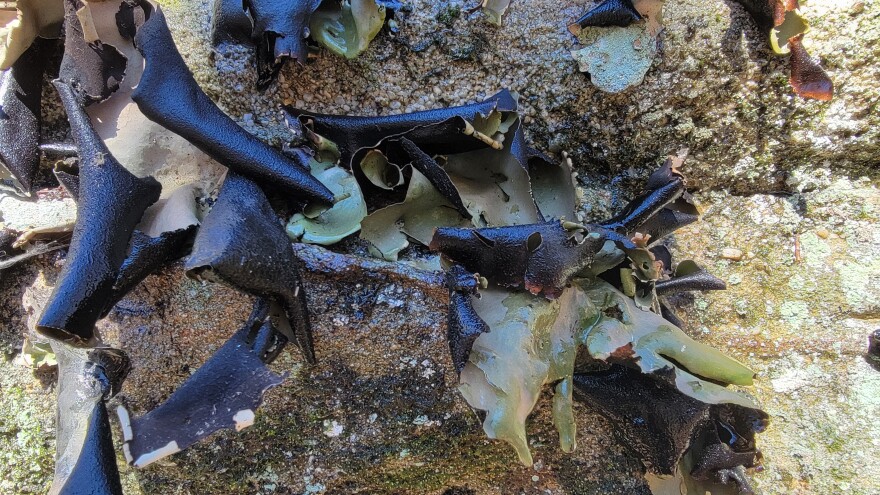
Rock Tripe (Umbilicaria mammulata) is a type of edible lichen, and it is plentiful in North America.
Chuck Kleine
/
RocK tripe growing on sand stone
A lichen is not just one organism–it is a mutual, symbiotic life form comprising of a species of fungus and a species of algae. They work together to survive, needing very little from their surrounding environment.
Chuck Kleine
/
Rock tripe in February
In the dead of winter, when just about every plant is dormant, Rock Tripe is still thriving. It’s not great tasting, and you may even struggle to keep it down, but it will alleviate hunger pains. It contains a similar amount of calories as cornflakes.
Soldiers from the Battle of Valley Forge journaled that they ate Rock Tripe by the bushels to combat starvation through winter months of 1777. God forbid anyone is ever in such a dire situation, but when push comes to shove, now you know that Rock Tripe can be on the menu.
EDIBLE MOUNTAIN – Rock Tripe A Winter Survival Food
Edible Mountain is a bite-sized, digital series from WVPB that showcases some of Appalachia’s overlooked and underappreciated products of the forest while highlighting their mostly forgotten uses. The series features experts, from botanists to conservationists, who provide insight on how to sustainably forage these delicacies. It also explores the preparation of these amazing delectables, something that many could be achieved in the home kitchen.
Add WVPB as a preferred source on Google to see more from our team
Kentucky Fried Chicken founder Colonel Sanders' iconic items earned big bucks at auction. For the Appalachia + Mid-South Newsroom, reporter Andrew Henderson went to the auction and hung around for the fried chicken.
This week, having a very specific talent can lead to a dream job. It’s how cartoonist John Rose got his foot in the door to draw the comic strip Snuffy Smith. Also, there are dos and don’ts for treating poison ivy. And, a young, old-time musician wants to save her family’s lost ballads.
For nearly 100 years, Snuffy Smith has been a staple of newspaper comic pages, though these days, it’s easier to find him online. Snuffy Smith was brought to life by Artist Fred Lasswell in the 1930s, but now the strip is written and drawn by John Rose, who lives in Virginia’s Shenandoah Valley. We hear from Rose about drawing the famous hillbilly.
Virginia writer Emilee Hackney has a complicated relationship with her home. She loves the place where she’s from, in Tazewell County — her friends, family, the swimming holes and mountains and wild places — but she also felt stifled. Her new memoir "All That’s Unseen: An Appalachian Memoir" explores this tension and her experience when she did leave. Inside Appalachia Host Mason Adams spoke with Hackney about the book.