Kentucky Fried Chicken founder Colonel Sanders' iconic items earned big bucks at auction. For the Appalachia + Mid-South Newsroom, reporter Andrew Henderson went to the auction and hung around for the fried chicken.
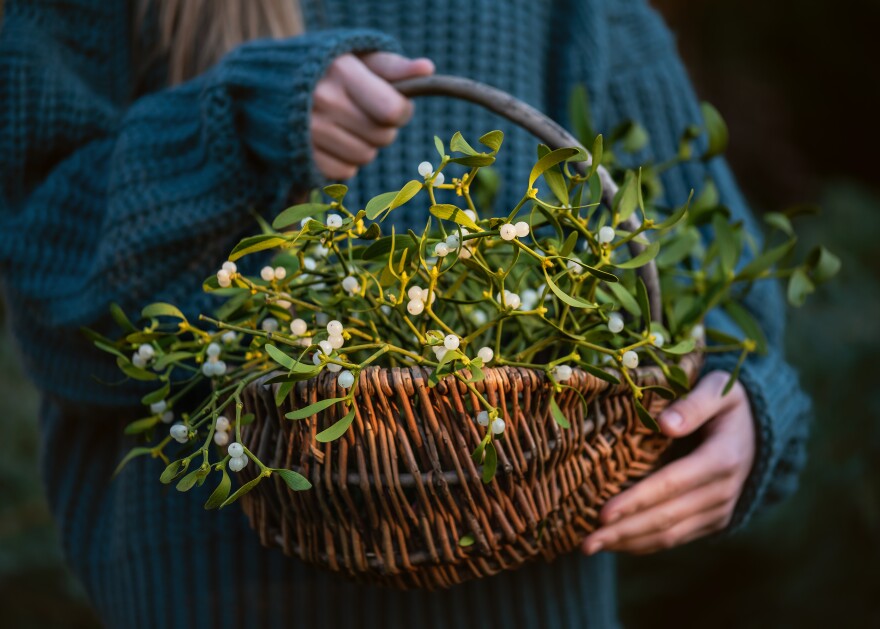
Mistletoe (Phoradendron leucarpum) is found in all 55 counties in West Virginia. It grows high in the branches of hardwood trees and is considered semi-parasitic.
Sometimes called kiss and go, it pushes its root-like structures called haustoria into tree branches, where it takes water and nutrients from the host tree. It spreads to other tree tops by birds eating its white berries.
Oksana Schmidt – stock.adobe.com
/
400164660
Sounds like a freeloader, right? But some studies suggest that by attracting more berry-eating birds, other berry-producing plants nearby benefit as well, thus promoting higher diversities of berry-eating animals and creating a much more diverse ecosystem overall.
Because it grows so high in trees, harvesting it can be tricky. Some folks shoot it out of the tree and try to catch it. With a wholesale market price of $10 per pound, a clump could bring in as much as $500.
All parts of the plant are toxic when ingested. While the bulk of poison cases are children, no fatalities have been reported.That’s probably one of the reasons why we hang it high and out of reach when used as Christmas decor.
Picture Partners/Picture Partners – stock.adobe.c
/
28518090
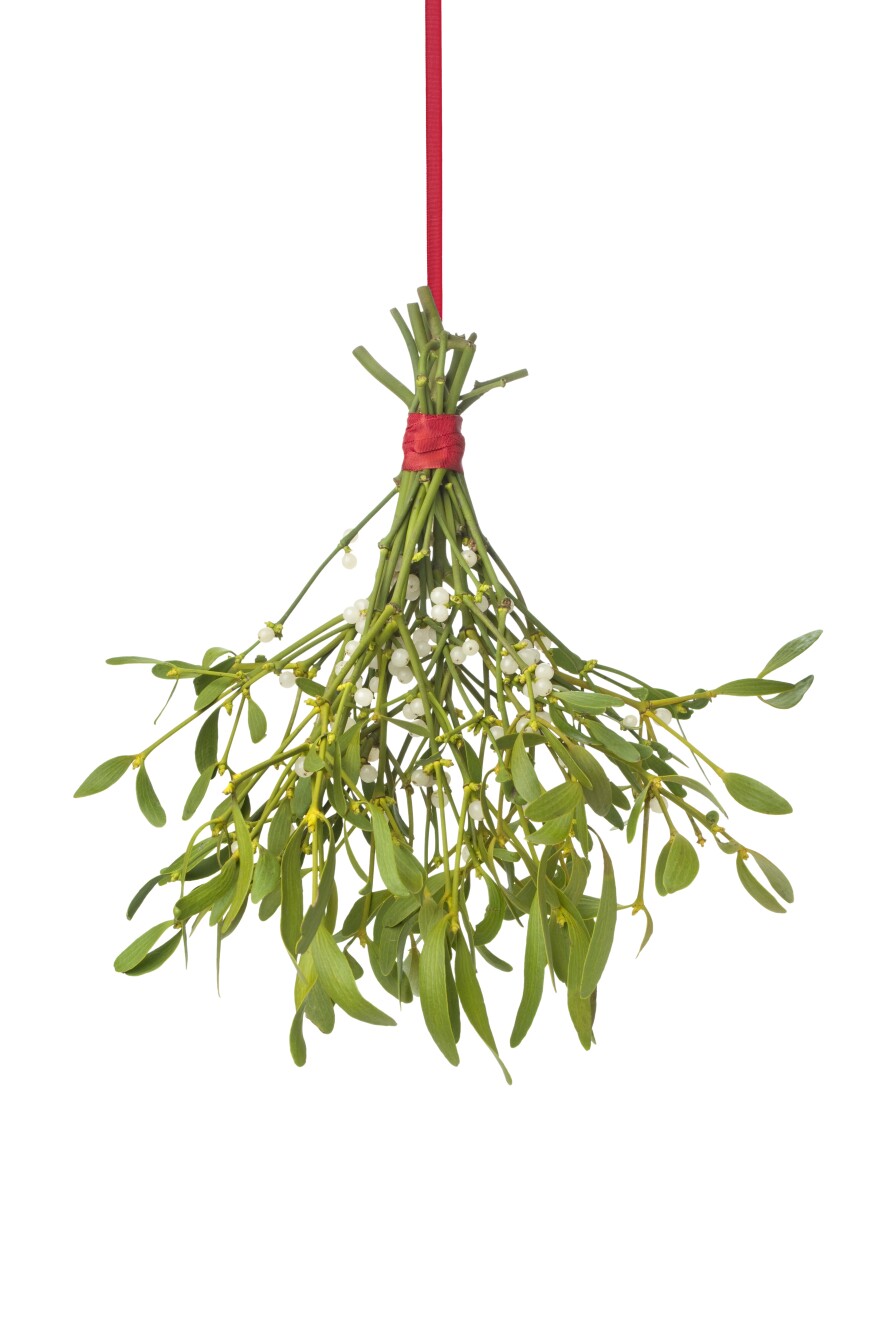
Fresh mistletoe hanging on a red ribbon on white background
Mistletoe has a wealth of cultural references throughout history and across the world. Of course the one we all know and love is the tradition of meeting someone under the mistletoe and stealing a kiss.
But, per old Appalachian folklore, if you put mistletoe under your pillow on Christmas, you’ll see the face of your true love while you dream.
EDIBLE MOUNTAIN – Mistletoe
Edible Mountain is a bite-sized, digital series from WVPB that showcases some of Appalachia’s overlooked and underappreciated products of the forest while highlighting their mostly forgotten uses. The series features experts, from botanists to conservationists, who provide insight on how to sustainably forage these delicacies. It also explores the preparation of these amazing delectables, something that many could achieve in the home kitchen.
Add WVPB as a preferred source on Google to see more from our team
Kentucky Fried Chicken founder Colonel Sanders' iconic items earned big bucks at auction. For the Appalachia + Mid-South Newsroom, reporter Andrew Henderson went to the auction and hung around for the fried chicken.
This week, having a very specific talent can lead to a dream job. It’s how cartoonist John Rose got his foot in the door to draw the comic strip Snuffy Smith. Also, there are dos and don’ts for treating poison ivy. And, a young, old-time musician wants to save her family’s lost ballads.
For nearly 100 years, Snuffy Smith has been a staple of newspaper comic pages, though these days, it’s easier to find him online. Snuffy Smith was brought to life by Artist Fred Lasswell in the 1930s, but now the strip is written and drawn by John Rose, who lives in Virginia’s Shenandoah Valley. We hear from Rose about drawing the famous hillbilly.
Virginia writer Emilee Hackney has a complicated relationship with her home. She loves the place where she’s from, in Tazewell County — her friends, family, the swimming holes and mountains and wild places — but she also felt stifled. Her new memoir "All That’s Unseen: An Appalachian Memoir" explores this tension and her experience when she did leave. Inside Appalachia Host Mason Adams spoke with Hackney about the book.