Alert (09/29/2026): Our Parkersburg TV transmitter is still undergoing maintenance and remains temporarily inoperative. We apologize for the inconvenience.
All our programming is available via our TV livestreams on our website and WVPB Passport. Thank you for your patience!
This week's premiere broadcast of Mountain Stage honors the lives of artists who we lost over the past few years. On this "In Memoriam" episode, you will hear archived performances by Jill Sobule, Todd Snider, Chip Taylor, Justin Townes Earle, and more.
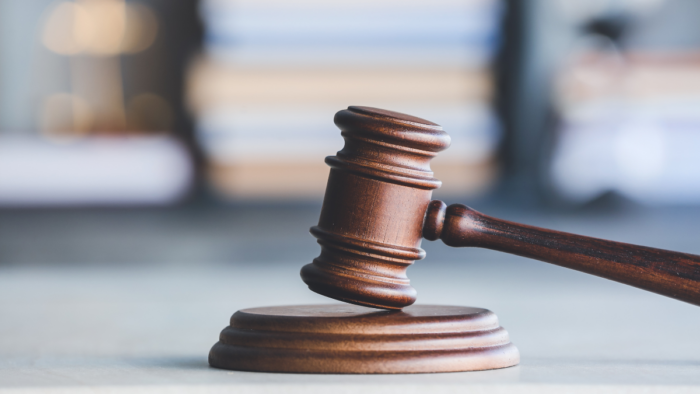
W.Va. Supreme Court Suspends And Fines Circuit Court Judge
Pixel-Shot/Adobe Stock
Listen
Share this Article
In July of 2021, Judge C. Carter Williams, of the Twenty-Second Judicial Circuit, was involved in a traffic stop in the town of Moorefield. Court documents show Williams, stopped by a patrolman for having a cell phone in his hand while driving, “identified himself as a judge, contacted the officer’s supervisors, including the Chief of Police and the Mayor, and made coercive and retaliatory comments.”
Initially, the West Virginia Judicial Hearing Board (JHB) concluded Williams’ conduct during the stop warranted a three-month suspension.
This week, the West Virginia’s Supreme Court of Appeals, in a 56 page document, ruled that a six-month suspension, a censure and a $5,000 fine was more appropriate for Williams. This penalty was in line with a recommendation from the Judicial Disciplinary Counsel.
Chief Justice Beth Walker issued an opinion stating, “The failure (of Williams) to acknowledge the wrongful nature of his conduct is a significant factor to consider, and we conclude that it justifies a harsher sanction than that imposed by the JHB.”
Two cases about whether the West Virginia Board of Education can mandate vaccines to students entering school without allowing for religious exemptions have been combined by the state Supreme Court of Appeals.
The votes are in – more than 3,200 of them – and the winner of the inaugural Coolest Thing Made In West Virginia competition will be announced next week. It’s down to the final five. Assistant News Director Maria Young caught up with Bill Bissett, president of the West Virginia Manufacturers Association, which is hosting the contest, to find out more about the finalists.
We remember Dolly Parton, not just as a musician and celebrity, but as a voice for Appalachian humor, resilience and kindness. Inside Appalachia’s Mason Adams spoke with Mountain Stage host and country star Kathy Mattea, who shares some of her memories.
Following a medical incident Wednesday morning at the Supreme Court of Appeals of West Virginia, Justice William “Bill” Wooton has been released from a hospital.

































 Pixel-Shot/Adobe Stock