This week, we look back at 2025. We met some fascinating people, like Aaron Dowdy of country rock band Fust. Also, central Appalachia continued to recover from Hurricane Helene. From the beginning, the recovery brought people together. And, we made a trip to Hillbilly Hotdog to take on "The Homewrecker."
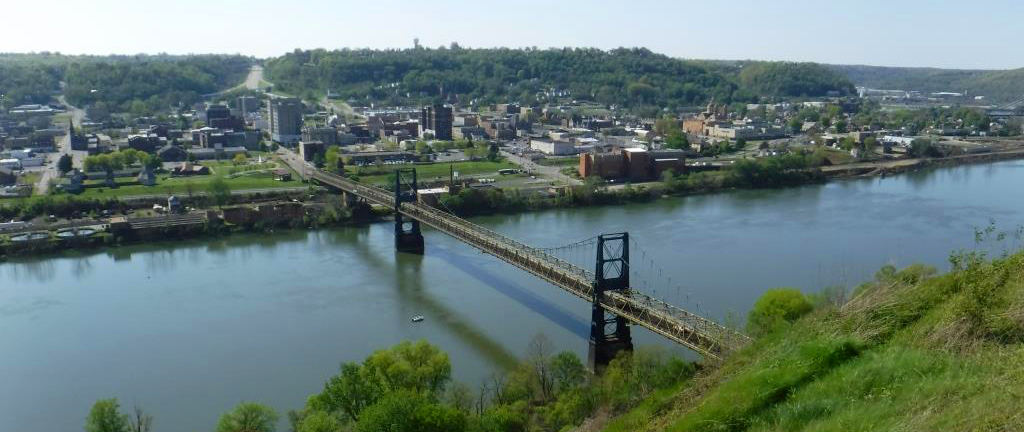
The American Society of Civil Engineers gave West Virginia an overall grade of D+ on five categories including roads, bridges, broadband and stormwater.Briana Heaney/West Virginia Public Broadcasting
Listen
Share this Article
West Virginia’s infrastructure has improved but still got an overall failing grade in a new report.
The group gave the state an overall grade of D+ on five categories including roads, bridges, broadband and stormwater. That’s actually an improvement from the group’s 2020 report but below the national grade of C.
“Our infrastructure systems are seeing improvements here in West Virginia and progress should be applauded for our dedicated state leaders that are implementing new programs and technologies to address our state’s needs,” Tabitha Lafferre, West Virginia section president, said. “However, a D+ grade is not where we want to be. Infrastructure connects communities and our workforce, moves goods across the state and region, keeps the heat on in the winter and clean water coming through our faucets. The safety and prosperity of our state depend on continued dedication to improving our infrastructure.”
West Virginia’s falling population statewide presents challenges for utility operators, who face higher operations and maintenance costs due to the rising cost of labor and materials, while revenue from customers continue to decrease. These falling revenues are particularly impactful as much of the state’s infrastructure is approaching or past its design life, and existing assets need to be modernized to become more resilient to weather challenges.
The improved grade is largely because of record levels of federal investment in the state from the Infrastructure Investment and Jobs Act (IIJA).
West Virginia’s bridges have benefited from the IIJA, which has provided $548 million in bridge funds over the five-year course of the law.
The roads grade improved to a C- due to more than $3 billion from the IIJA being dedicated to roadway improvements. Congestion rates have nearly doubled in the past 40 years and the state’s roadway fatality rate of 16.6 per 100,000 exceeds the national average of 12.9.
Drinking water systems, which improved from a D to a D+, face more than $1 billion in maintenance and modernization needs, underscored by significant treated water losses due to leaking pipelines.
The state’s overall network has improved reliability as larger utilities have absorbed more than 160 failing smaller systems. Wastewater systems are falling behind, as only 47% of West Virginians are served by regulated sewer utilities and the state ranks first nationally in clean water infrastructure needs per capita at $6,182.
State leaders made progress by committing $106 million to wastewater projects in recent years, but $3.6 billion is still needed for repairs, expansion and upgrades, according to the report.
West Virginia’s dams, drinking water and roads grades improved from 2020 marks, while bridges and wastewater remained the same. The state’s bridge network is aging, with 19% of its 7,300 bridges in poor condition.
The national average is 6.8% of bridges in poor condition.
The West Virginia Report Card was led by engineering professionals and featured research contributions from more than 50 Fairmont State University students.
Cumulative General Revenue Fund collections of more than $2.742 billion are $128.1 million above the year-to-date estimate and 2.5% ahead of prior year collections.