Environmental Protection Agency (EPA) Administrator Lee Zeldin met with Sen. Shelley Moore Capito, R-W.Va., and Gov. Patrick Morrisey to discuss West Virginia’s energy contributions and future.
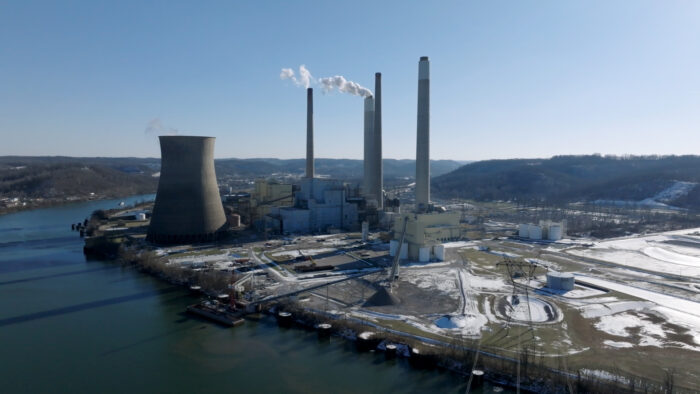
Following a roundtable discussion at the Robert C. Byrd federal courthouse in Charleston, Capito indicated they planned to give Zeldin a tour around the Toyota Plant in Buffalo, the John Amos Power Plant and the construction site for the Nucor steel plant in Mason County.
“It’s great to be here in West Virginia. When the President asked me to serve as EPA administrator right after nomination, one of the very first things that I did was go to Sen. Capito’s website, read every single press release and op-ed that she had put out on all issues on West Virginia energy, environment,” Zeldin said. “It really helped orient me to where the chair of the Senate EPW [Environment and Public Works] committee was, what many of the top asks were for West Virginia. And I’m glad that there was a long list of priorities and asks coming from the congressional delegation led by Sen. Capito.”
One of the tour stops is the aging John Amos Power Plant. Zeldin is interested in keeping those plants operational.
“Our predecessor at the Biden EPA, they were treating it as a binary choice. You could protect the environment or grow the economy,” Zeldin said. “In order to protect the environment, you would have to strangulate the energy economy in West Virginia. We don’t believe that at the Trump EPA. We oppose that approach.”
West Virginia is the 49th state Zeldin has visited since taking office.
“As I’ve been traveling the country, I have continued to see coal plants that were about to close staying open. Not only are they staying open, but now they are investing new money into their site,” Zeldin said. “They’re expanding their operations. That is the direction that we want to go. We need to make the economics work. The Biden EPA was trying to close down coal plants in West Virginia and across the country.”
In an Appalachian Power case before the West Virginia Public Service Commission (PSC), West Virginia Public Broadcasting previously reported that expert testimony revealed Appalachian Power lost money running its three coal plants in 2024 and the losses are forecast to continue into 2025.
In testimony, an expert calculated that Amos incurred the biggest loss: almost $59 million for the 12 months ending in February.
“We want to do everything in our power to help West Virginia succeed and thrive. In 2023 and 2024, you had all sorts of different rules, regulations coming out of the Biden EPA trying to eliminate coal,” Zeldin said.
According to the Gas and Oil Association of West Virginia, natural gas has produced more in severance taxes than coal in four of the past five years.
“If you want to talk about creating new energy capacity, building new plants, whether it’s nuclear, it’s gas, it’s coal, building new pipelines, whatever the conversation is in that region and in that locality, in that state, it’s all about making the economics work,” Zeldin said. “What we can do is make sure that we aren’t tying their hands behind their back and making it impossible to invest in their company and in these communities.”
West Virginia ranks fifth in natural gas production, accounting for 8% of gas produced nationwide.
Just last week, FirstEnergy announced plans for a new natural gas power plant in the state.