Alert (09/10/2026): Our Parkersburg TV transmitter is undergoing maintenance for a few days and will not be operational. We apologize for any inconvenience.
All our programming is available via our TV livestreams on our website and WVPB Passport. Thank you for your patience!
News Director Eric Douglas sat down in a classroom studio with Marshall's Chuck Bailey, the student news director Emma Johnson, and the Director of the Marshall School of Journalism and Mass Communications Rob Quicke, to learn more.
Don’t get us wrong, we love doing themes for “Mountain Stage After Midnight” (see: Celtic music for St. Patrick’s Day, archived sets in honor of new releases). But this week’s archived shows are nothin’ but good music, plain and simple.
Broadcast from 1am-5am Saturday and Sunday mornings here on West Virginia Public Broadcasting, “Mountain Stage After Midnight” takes the best episodes from the show’s 31 year history and shares their memories and songs with our late-night listeners.
Take a mid-day nap and stay up late to hear some amazing live performance radio on Saturday April 18 and Sunday April 19 during “Mountain Stage After Midnight.”
First up is a January 2008 show featuring Bill Evans Soulgrass with Sam Bush & Richard Bono, Marc Cohn, Jeremy Fisher, Kelly Sweet and Amy Correia.
Credit Brian Blauser/Mountain Stage
/
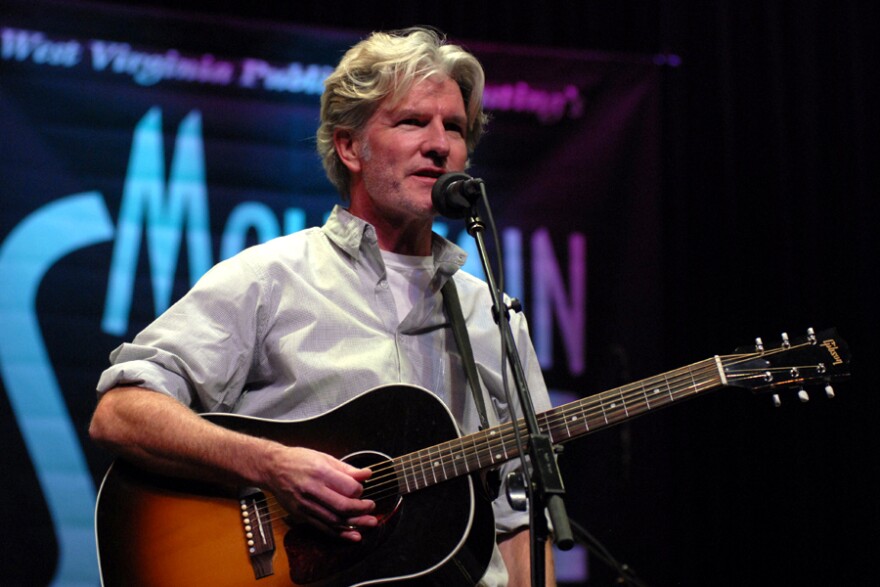
Tim Finn on the Mountain Stage in 2008.
We’ll also hear a February 2008 show featuring Tim Finn, Otis Taylor, Grant Lee Phillips, Patty Larkin and Joe Rathbone.
Appalachia, and the entire world, really, was shaken by the passing of Dolly Parton. Dolly — everyone called her Dolly — was a Tennessee native, country and pop music singer, and philanthropist who invested heavily in people – especially here in Appalachia. And in children’s literacy through her Imagination Library, which provides free books to young kids. To a lot of people, she was Appalachia. To mark her passing, Inside Appalachia Host Mason Adams spoke with Ted Olson, a country music historian at East Tennessee State University’s Department for Appalachian Studies.
On this week’s encore broadcast of Mountain Stage, host Kathy Mattea welcomes Russell Moore & IIIrd Tyme Out, Jack Blocker, Cole Quest & The City Pickers, Courtney Hartman, and The Critton Hollow String Band.
This week’s encore broadcast of Mountain Stage was recorded at the Peoples Bank Theatre in Marietta, Ohio in 2025. Guest host David Mayfield welcomed Hannah Cohen, Boulevards, Amy Millan, Lera Lynn, and Oyo to record episode 1,069.
Our Song of the Week is “Suitcase Song,” performed by stylistic chameleon Nellie McKay. Originally featured on Nellie’s 2004 debut album, Get Away from Me, “Suitcase Song” was rereleased on Gee Whiz: The Get Away from Me Demos, in 2025.