Your browser doesn't support audio playback.
Too often, people with mental health challenges or substance use disorder wind up in jail. But crisis response teams offer another way.
Also, changes to the Endangered Species Act could benefit big business. They could also kill animals like the eastern hellbender.
And, in troubled times, a West Virginia writer says to find peace in nature. We talk about her collection of essays.
You’ll hear these stories and more this week, Inside Appalachia.
In This Episode:
- Crisis Intervention For Mental Health In W.Va.
- In Conversation With A Gambling Addiction Counselor
- Eastern Hellbender Preserve In Ohio Promotes Railroad History
- W.Va. Author Writes About The Natural World
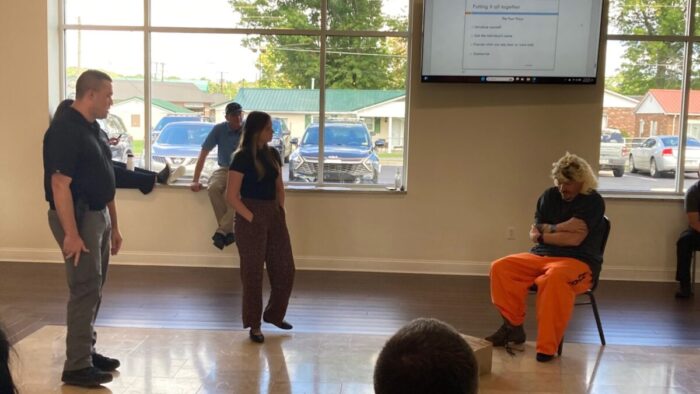
Crisis Intervention For Mental Health In W.Va.


Photo courtesy of Cabell County Quick Response Team
Appalachian communities have long dealt with high rates of substance use disorder and mental health challenges. The toll is felt by everyone: the person in crisis, their families, even police officers and EMTs. In West Virginia, the problem reached a boiling point during the COVID-19 pandemic. The systems couldn’t handle it. So, a few localities tried something new. So far, it seems to be working.
Over several months, host Mason Adams spent time with crisis teams in Huntington and Princeton, West Virginia, and produced the following story in collaboration with the Carter Center and the Mental Health Parity Newsroom Collaborative. A warning, this story contains descriptions of suicide attempts, substance use disorder and mental health crises.
In Conversation With A Gambling Addiction Counselor


Photo Credit: Eric Douglas/West Virginia Public Broadcasting
Since a U.S. Supreme Court decision opened the door, online sports betting is legal around much of the country. Online poker and casino gambling is legal in six states, including at multiple places in Appalachia. As gambling became more mainstream, states have moved to offer resources to help with gambling addiction. In West Virginia, there is the Problem Gambling Help Network at 1-800-GAMBLER.
WVPB News Director Eric Douglas spoke with Sheila Moran of First Choice Services, which runs the helpline. She’s also a certified gambling counselor.
Eastern Hellbender Preserve In Ohio Promotes Railroad History

Photo Credit: Julie Grant/The Allegheny Front
The Trump administration plans to weaken the Endangered Species Act. That could affect the fate of lots of species of insects and animals, including the monarch butterfly, the alligator snapping turtle and the eastern hellbender salamander.
The Allegheny Front’s Julie Grant recently visited a new preserve dedicated to hellbenders and found not only natural history, but American history.
W.Va. Author Writes About The Natural World

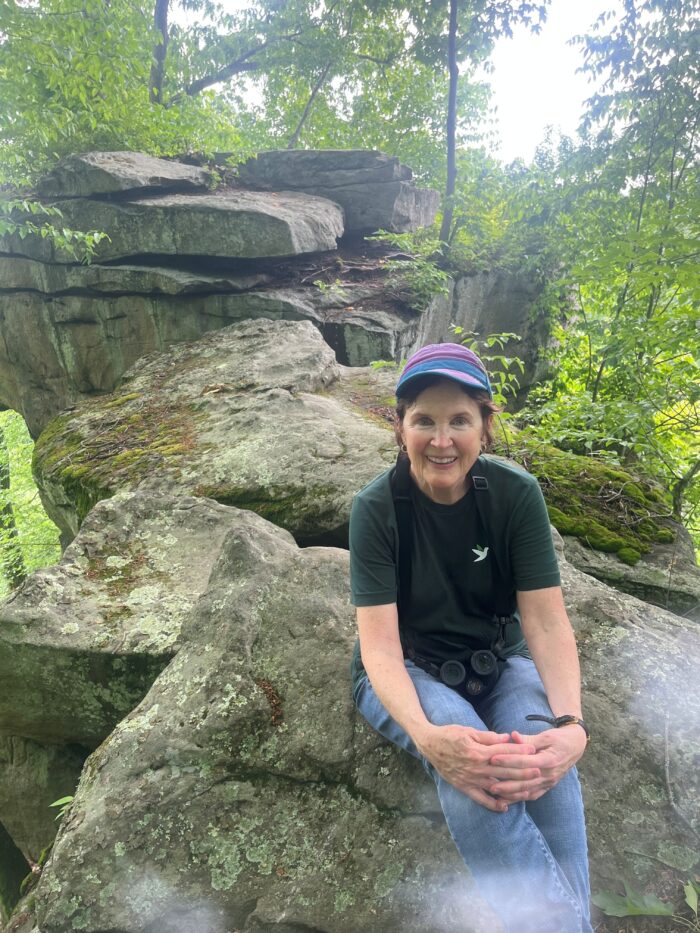
Photo courtesy of Sheila McEntee
Writer Sheila McEntee has been observing nature for most of her life, especially birds. She’s published essays about her experiences in Stonecrop Review, Woods Reader and Wonderful West Virginia magazine.
Several of these essays have been collected for McEntee’s first book. It’s titled, Soul Friend: And Other Love Notes to the Natural World. Producer Bill Lynch spoke with McEntee about writing and developing an interest in nature.
——
Our theme music is by Matt Jackfert. Other music this week was provided by Blue Dot Sessions, Hello June and Gerry Milnes.
Bill Lynch is our producer. Abby Neff is our associate producer. Our executive producer is Eric Douglas. Kelley Libby is our editor. Our audio mixer is Patrick Stephens.
You can send us an email: InsideAppalachia@wvpublic.org.
You can find us on Instagram, Threads or here on Facebook.
Sign-up for the Inside Appalachia Newsletter!
Inside Appalachia is a production of West Virginia Public Broadcasting.