


Your browser doesn't support audio playback.
This story originally aired in the Nov. 1, 2026, episode of Inside Appalachia.
When times get tough, Appalachians start singing.
Appalachia has a rich history of protest music. Today, some regional musicians are using their voices to oppose data centers being built across Appalachia and the artificial intelligence (AI) they power.
“Music allows people the opportunity to express themselves and to express their community values and to bring people together around a common cause,” said Ted Olson, a folklorist and music historian at East Tennessee State University.
Because protest music is generally not-for-profit, it also holds a sort of sacred place in communities, according to Olson.
“It’s always about risk taking of course, too, because often protest music involves speaking truth to power,” he added.
Olson said music was especially important during the mine wars era of the early 1900s, when workers across the region went on strike and in some cases even took up arms to fight against exploitative labor and extractive environmental practices.
The period birthed the song “Which Side Are You On?” when, after her house in Harlan County, Kentucky, was raided by anti-union officers, activist Florence Reese adapted the melody from an old hymn called Lay the Lily Low.
Reese’s ballad is still sung at labor protests today – and labor history is still inspiring musicians.
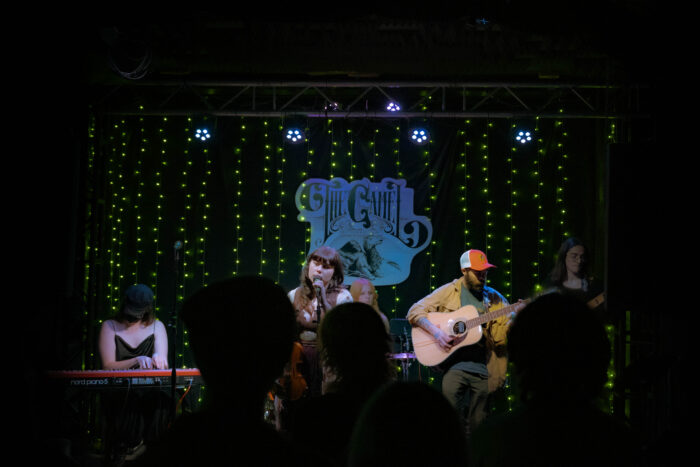
Betsy from Mars call themselves a climate justice folk-rock band. Lead singer and co-songwriter Betsy Jakob is now based in Richmond, Virginia, but the project was inspired by learning more about labor history while living in West Virginia with her parents during the pandemic.
“I realized that we’re actually kind of in the same cycle again where people don’t recognize the labor that goes into this never-ending push for technology to advance,” said Jakob, who also releases solo music under her maiden name Betsy Podsiadlo. “It comes at the cost of people’s lives and their autonomy and their ability to, you know, live a full life… I find that sickening.”
So she co-wrote a song called “Star Rider” about a worker stranded on the moon by a mining company’s greed. The song’s nameless star rider makes a futile attempt to come home, only to die en route and become a kind of futuristic folk hero.
Jakob has worked to bring a social message to her songs since before Betsy from Mars started in early 2025. (Disclosure: Reporter Andrea “river” Peterson first met Jakob a few years ago when they collaborated on a feminist murder ballad project.)
Betsy from Mars is a vehicle for its musicians to process their grief around environmental destruction and advocate for climate justice through song.
For Jakob, that means both being inspired by the resilience of workers from the Mine Wars era and speaking out against data center developments in Appalachia that she sees as being fueled by the same kind of greed that drove coal operators.
“I have never heard of a community that wants a data center,” she said.
West Virginian Greg Wilder is using his voice to bring attention to a specific data center project he worries will disrupt some of his favorite places in the state – and lists them in the chorus: “Davis, Thomas, Blackwater Falls, Canaan Valley in autumn fog, Dolly Sods and Bear Rocks views…”
The target of Wilder’s song is the Ridgeline project, a data center development that could cover thousands of acres in Tucker County, West Virginia, and has drawn legal challenges from local organizers and environmental groups.
Wilder said he actually used artificial intelligence, specifically ChatGPT, to research the song.
“I thought just one day I was sitting there thinking I’m going do an experiment: I am going to ask AI to pretend to be a 40-year-old man with an average family, an average income, an average job and lives in the town of Davis or Thomas, and to analyze everything about this project, everything about the politics, everything that is has been, I guess, put out in the open,” he said.
He asked the chatbot to give him three reasons whether the hypothetical resident should vote yes or no if given a vote to have this project in their area.
The results surprised him.
“ChatGPT said this is the wrong project for the wrong place,” according to Wilder.
ChatGPT cited state laws that took away local control, lack of job guarantees and potential impact on the area’s natural beauty, he said.
“It said, this is the tourism industry. This is where you should be promoting tourism. And then it listed the places that I put in my song. Davis, Thomas, Blackwater Falls. And I started looking at it, staring at it, and I thought ‘This could be a poem, it’s beautiful.’”
That sequence stuck with Wilder.
“The more I looked into it and the more I thought about this, I was like… this is a song. I could actually turn this into a data center blues song,” he said.
Wilder, who previously did oversight work within the federal government, said he is concerned about the lack of detailed information available to the public about the Ridgeline project.

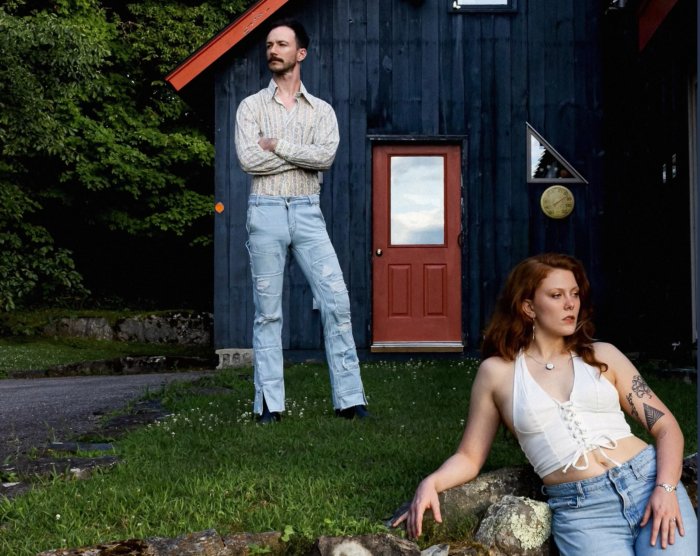
Photo courtesy of McLaughlin Darling
The Pittsburgh-based musical duo McLaughlin Darling said the generative artificial intelligence fueled by data centers is also a problem – in fact, they sing about it in the song “AI OH NO.”
“All my friends hate artificial intelligence, it’s nothing personal ‘cept it is – I like it personal 100% of the time,” they sing in the song.
Shane McClaughlin and Margot Darling started working together around five years ago as part of the band Buffalo Rose. But over the last year, they’ve started writing protest songs together – including “AI OH NO,” which they composed with longtime folk musician Tom Paxton.
McLaughlin said the song was written as a protest against the way that they believe artificial intelligence undermines human artistry.
“I feel like we learn about ourselves through our creativity and discover ourselves through that,” he said. “So I think when everything becomes homogeneous and like drawn from stuff that’s already existing, we like lose our future selves and future humanity in addition just the fun and joy of making something yourself or with a friend or with someone.”
Darling manages Buffalo Rose’s social media presence, which she said now involves competing directly against artificial intelligence and being prompted to include it in their own posts.
“All of the trending songs are not real songs,” Darling said. “It’s so dystopian.”
Olson, the music historian, says protest music is one of the most powerful tools everyday people have to voice their opinions.
“What is a more engaged response to a political or social issue than a protest song? Because that’s bringing creativity and passion to a current event or current issue,” he said. “We often sing protest songs today of current events that are otherwise more or less forgotten. And so the protest tradition immortalizes the struggle.”
McLaughlin encourages fellow Appalachians to give the tradition a try, especially if they haven’t found a piece of art that resonates with them yet.
“If it’s not there you can make it yourself and that will just lift your spirit and soul and the spirits and souls of all of those around you in a way that AI can never do,” he said.