


Your browser doesn't support audio playback.
Hundreds of thousands of kids rely on America’s foster care system.
West Virginia has the highest rate of foster care placements of any state – four times the national average. Foster care is most often needed because of parental substance use, mental health challenges, poverty and neglect. Six-thousand Mountain State kids are in foster care, but there’s a shortage of licensed foster homes and residential facilities and that’s why nearly 400 kids live in out-of-state institutions.
On this Us & Them, an encore episode finds more than half of all states have seen their number of licensed foster homes drop, some by as much as 60 percent because many new foster parents don’t stay in the system for long.
While official foster care cases are tracked and overseen by state agencies, many types of so-called kinship care are not official or included in state data.
This episode of Us & Them is presented with support from the West Virginia Humanities Council, CRC Foundation and Daywood Foundation.
Subscribe to Us & Them on Apple Podcasts, NPR One, RadioPublic, Spotify, Stitcher and beyond.

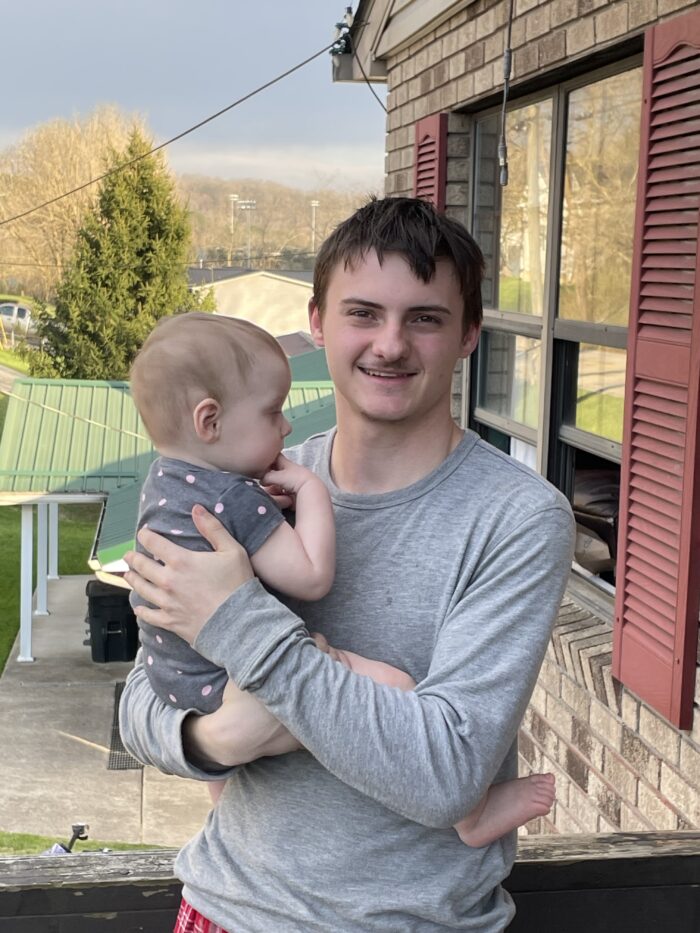
Photo Credit: Trey Kay/West Virginia Public Broadcasting
“I was in several foster care situations… I think three or four. It always seemed short and seemed as if we were getting bounced around.The hard part was probably just the beginning, how much I just always try to keep my siblings in check. I felt as if, if they behaved in a way, just like the other situations we might get taken away. It feels like yesterday that I got adopted. It went by fast. The things that make me smile was definitely adoption day. ‘Cause I knew, I finally found a family and I could try and live out the rest of my childhood.”
— Dominic Snuffer

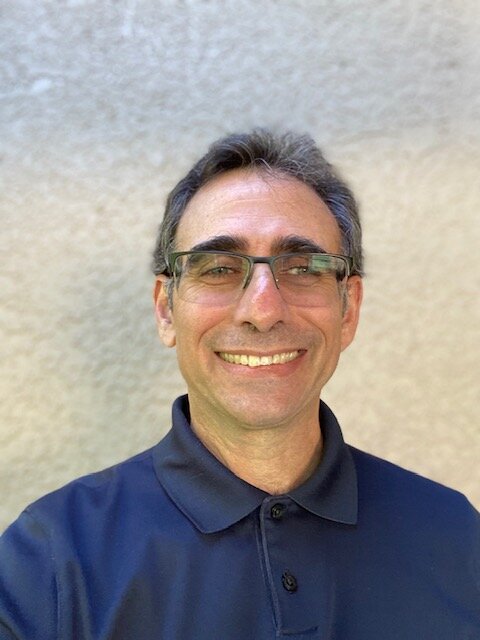
Photo courtesy of The Children’s Home Network
“You might fall off because of just life experiences that you may be going through. You might have a change in jobs. You might have an illness in your family. You might have a death in the family. And so I used to see for every 100 parents that I recruited, I might get only four to six families actually get a kid into their home for every hundred that would call me and be interested in becoming a foster parent.”
— Larry Cooper
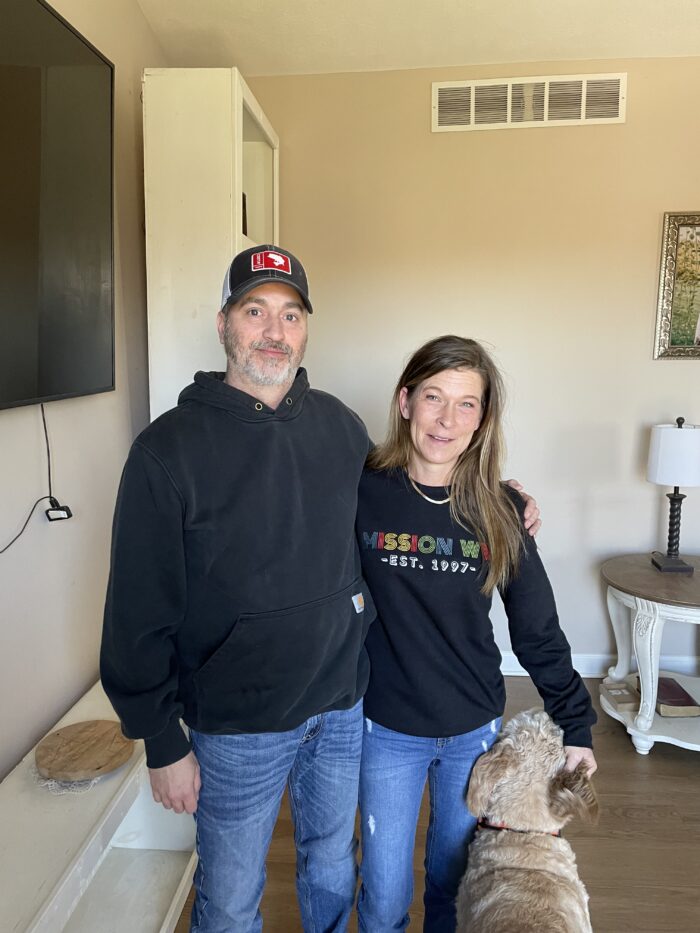
Photo Credit: Trey Kay/West Virginia Public Broadcasting
“ They both took the stand and said that they give up the rights to their child, I just started breaking down. She [Brandi] was sitting beside me like this and she looked over at me. She said, ‘What’s wrong?’ I said, ‘I can never imagine saying that about my own child’. She was kind of numb to it because she’s worked in the field. It was hard to hear somebody say that.”
— Marc Wilson
“It wasn’t until he was sitting next to me in the courtroom that I realized not everybody hears relinquishment. Not everybody hears abuse, neglect. Not everybody hears that – as CPS workers [this is] just everyday language. So once I was with him and realized, okay, this isn’t everybody’s life. They may have drug issues, domestic violence, gangs coming in and out of their home, but these words are not everyday life for a lot of people.”
— Brandi Wilson

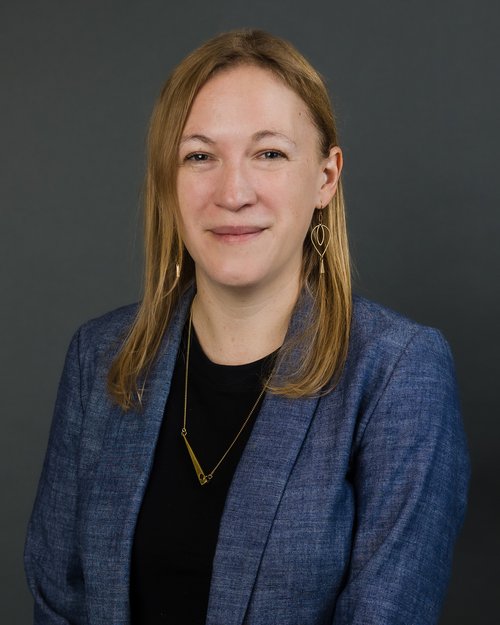
Photo Credit: Mission West Virginia
“I can tell you the number of kids in formal care, so if there are 6, 078 kids in foster care in West Virginia, right now 58 percent of those are in kinship relative placements. For kids in informal care, where grandma or an aunt or some type of relative or even what we call fictive* kin has stepped in, it’s almost impossible to get numbers on that.”
— Rachel Kinder
*Fictive care refers to placements where a foster parent knows the child, but is not related to them. This could be a teacher, family friend, or a neighbor.
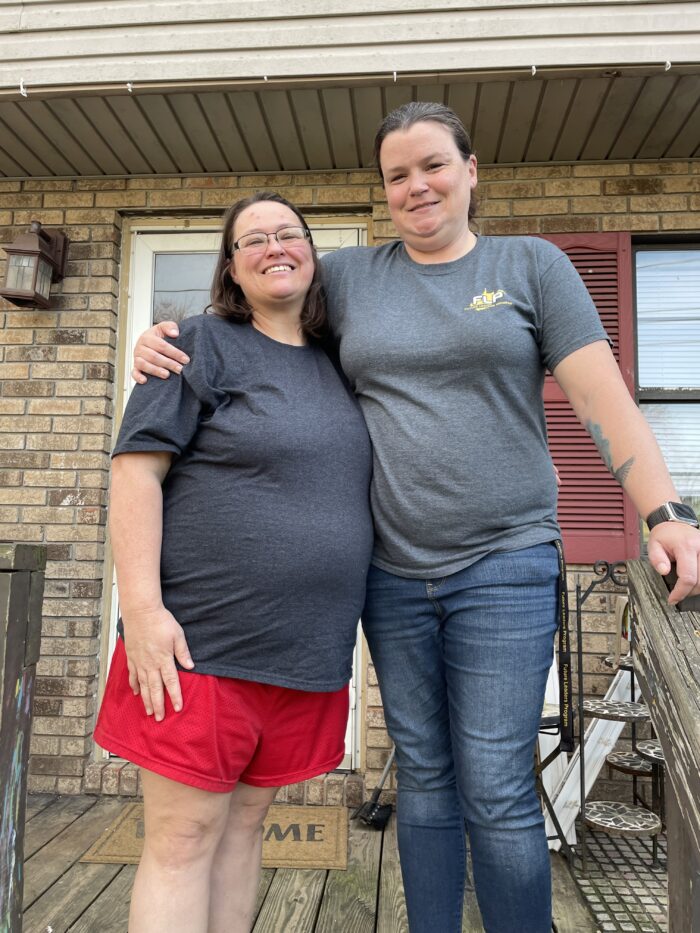
The Snuffers say their oldest daughter welcomed a baby last fall, making them grandparents for the first time. Their son Dominic attends Marshall University and is on track to graduate soon. The couple has also welcomed another child through a kinship placement. Nikki Snuffer now works with the Mountaineer Challenge Academy, a residential program that helps at-risk teenagers pursue education, structure and career training.
Photo Credit: Trey Kay/West Virginia Public Broadcasting
“It actually was a pretty easy decision because we were both on the same page almost always with helping people. I’ve known since probably my early high school years that I did want to do foster care. However, we really wanted no more than maybe three. And the way life and things happen. we got five at one time. I have two brothers who were put in foster care that I never knew and I still don’t know. So we made a commitment that when we got into it, that we would never split up families.”
— Louisa Snuffer
“If they call us for a sibling group, we’re not going to say ‘no’ to them because that was our number one belief. Like, ‘We need to do whatever we can to keep siblings together.’ When we were initially approved, we were approved for four children. So, DHHR [Department of Health and Human Resources] told us we could have four children in the house, given the space. And that, that was kind of our cap. I said, ‘Maybe we’ll do three tops,’ you know, that seems like a manageable number. And the very first call we got for placement was a sibling group of five. Of course we said, ‘yes.’ We had to do a few things to get approved for a fifth child. They moved in with us. Things went great.”
— Nikki Snuffer
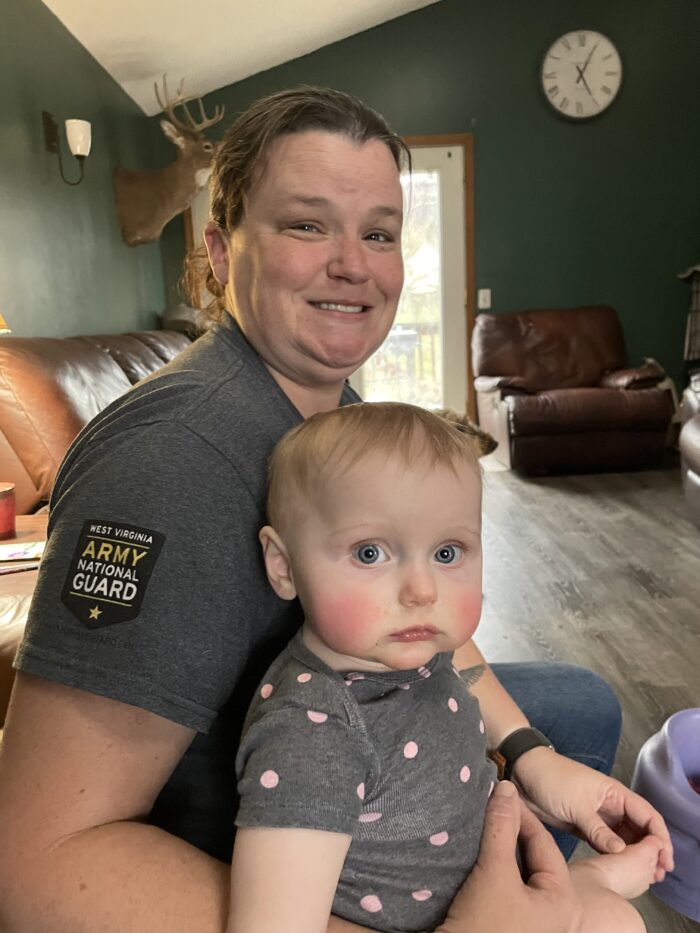
Photo Credit: Trey Kay/West Virginia Public Broadcasting
“[For] my kids that have gone to Winfield, I make them go through the [Future Leaders] program. Not because I’m teaching it, but because even if it wasn’t me, I’d want them to get these skills. It’s the kind of things that are forgotten these days.”
— Nikki Snuffer