


Your browser doesn't support audio playback.
For this episode of Us & Them, it’s time for another Dinner Party.
Host Trey Kay brings together a group of West Virginians from both sides of the political aisle to break the number one rule of entertaining: they talk politics. Over a potluck meal, the guests share their views on some of the issues shaping the conversation ahead of the midterm elections, with the hope of understanding their differences a little better and perhaps even finding some common ground.
This gathering took place in Charleston just a few weeks before the midterm election and brought together a mix of Dinner Party veterans and first-time guests of all ages. It is the first of three Us & Them Dinner Parties planned across West Virginia this fall, with another gathering in Huntington before Election Day, and a third in Morgantown just after the votes are cast.
This episode of Us & Them is presented with support from the CRC Foundation, Daywood Foundation and the Friends of West Virginia Public Broadcasting.
Subscribe to Us & Them on Apple Podcasts, YouTube Music, Spotify, the NPR app and wherever you get your podcasts.

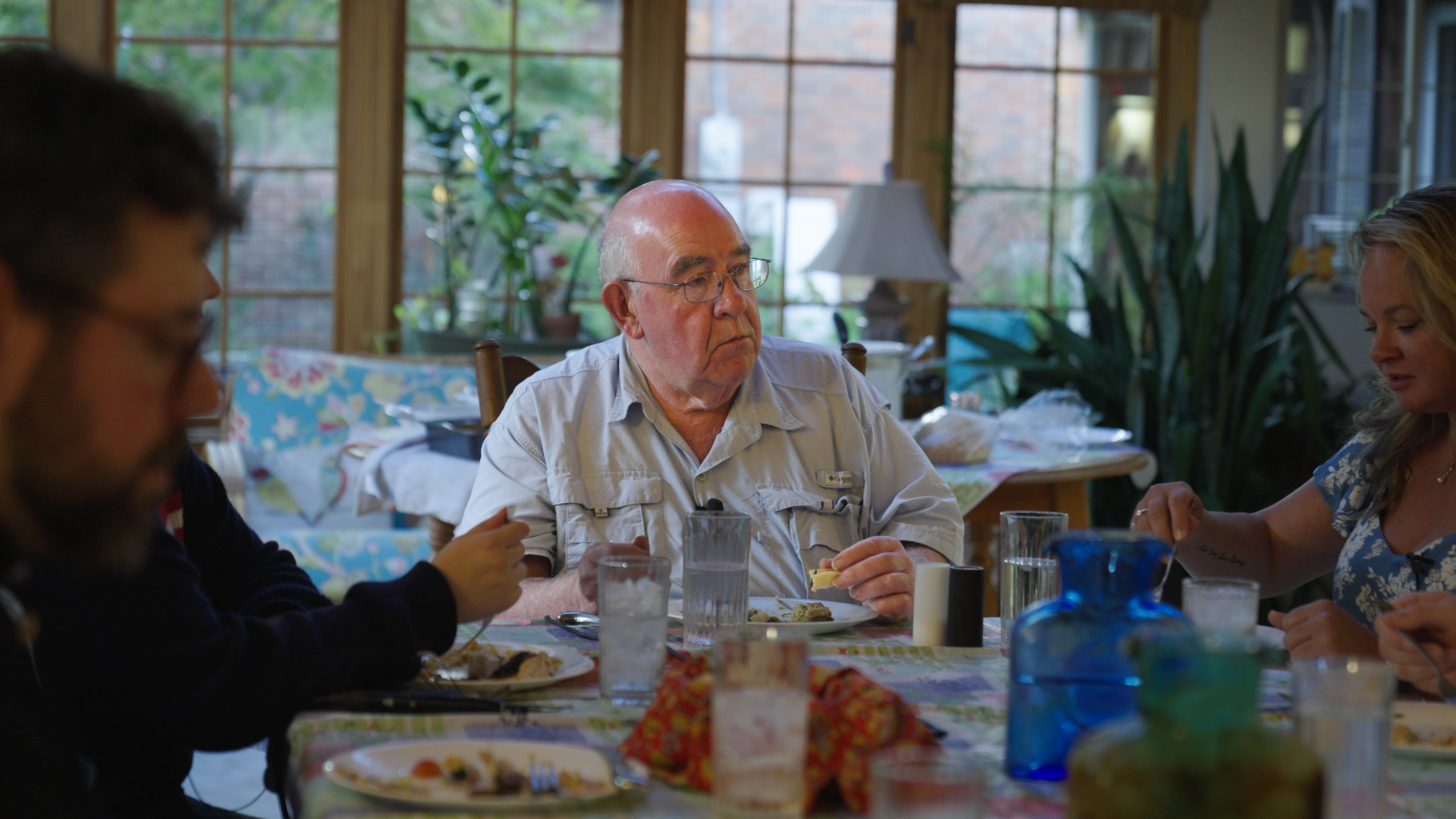
Photo Credit: Ethan Rayment/West Virginia Public Broadcasting
“[The 2020 election will] never be totally solved, but, I think this photo ID voting… I’ve got to use it on everything else. If I go buy a beer, I’m 73 years old, I got to show them my driver’s license. … You gotta have it for so much other things, why such a fight about it?”
— Jay Gould
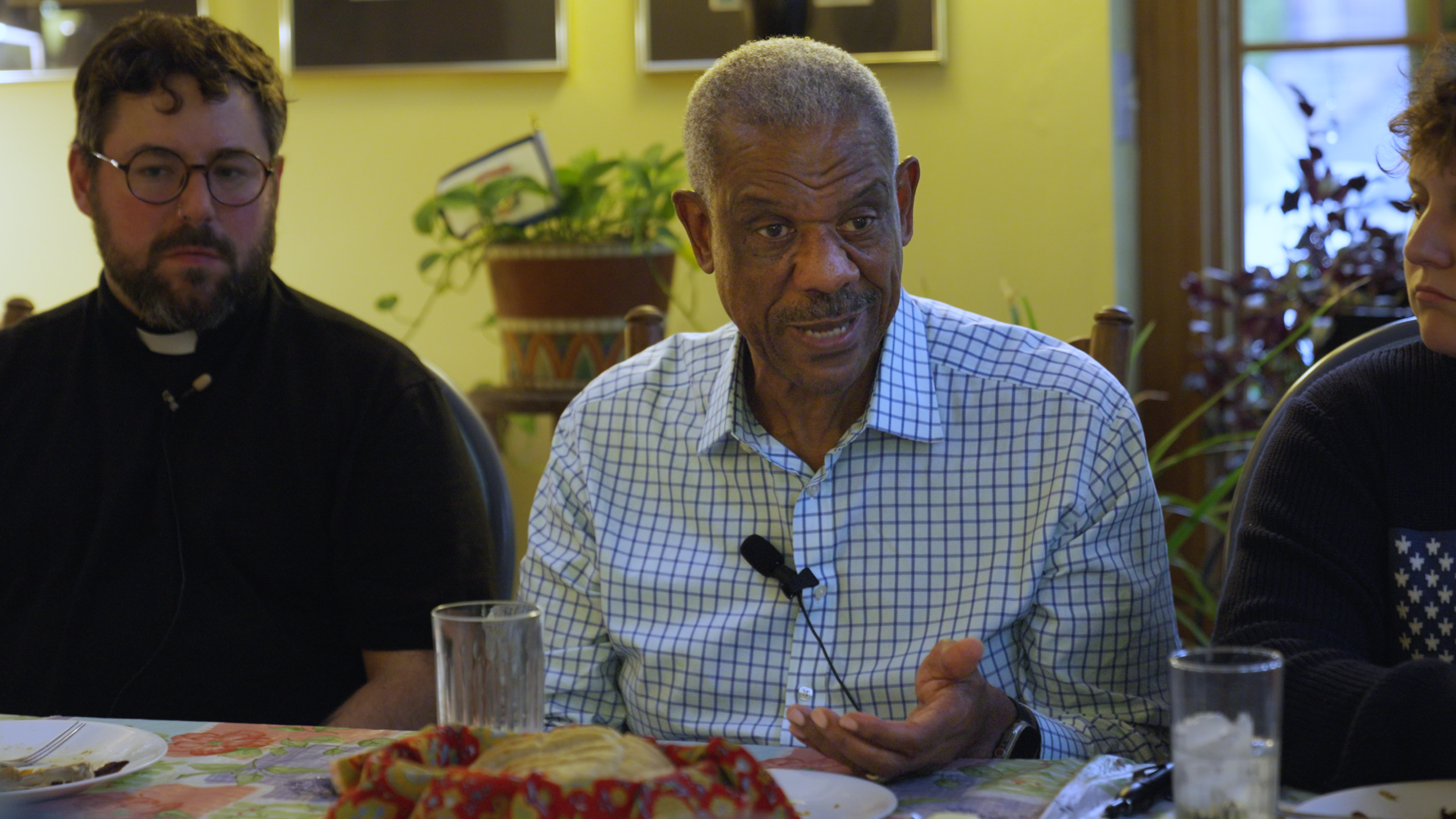
Photo Credit: Ethan Rayment/West Virginia Public Broadcasting
“The problem, the big problem is not just that it’s being done, but where it’s being directed. All of the polling issues that we have are being directed at minority neighborhoods so they can suppress the vote. … I can compromise with everybody on just about everything. I mean, I’m a mediator. This is what I do. But I can’t compromise with somebody who is willing to have the vote of people I care about diminished. Can’t do it.”
— Elliot Hicks

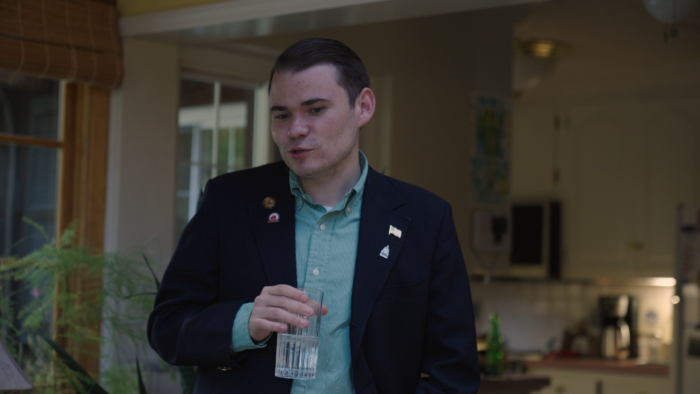
Photo Credit: Ethan Rayment/West Virginia Public Broadcasting
“I’m writing a column about this for the Wheeling paper about the “Save America Act,” which has been one of President Trump’s pieces of legislation. And the argument being made for it is too costly to implement. I mean, it requires a passport, which, for voting, I believe is too high of a bar. … Go down to making a Real ID and amending the Real ID Act of 2005 to allow for that to count as proof of citizenship, and work with the states to get grants to get people to be able to prove citizenship to get the Real ID.”
— Michael Borsuk
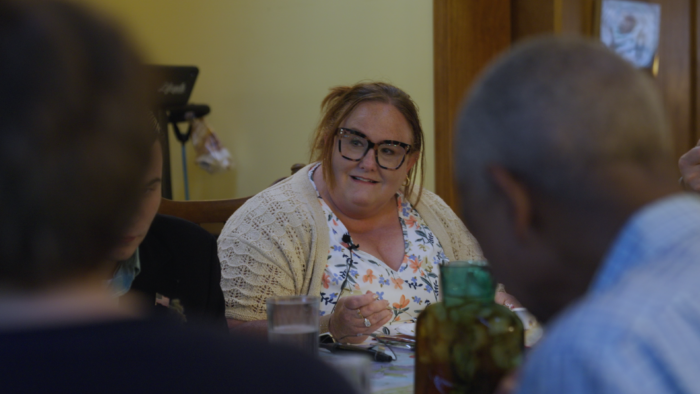
“One of the things that we get pretty regularly [at Heart & Hand Outreach Ministries] are discounted birthday cakes. So they’re the ones that nobody buys, and they have to be thrown away or given to a food pantry, and we have great volunteers that go pick those up, and you would not believe how excited people get over getting one of those cakes that’s about to expire. And it’s not just kids, it’s elderly people. Like, it’s a real treat for them.
“And I thought to myself, ‘What is wrong with that?’ Like, I just gave someone who can’t pay their water bill, who probably doesn’t have enough food to eat at their house because they’re at a food pantry, we just gave them some joy. … Being a human, to me, isn’t about surviving. It’s about being able to have joy and comfort and caring for one another.”
— Jennifer Keener
Listen below to Jennifer Keener read her poem “Build a Bigger Table.”
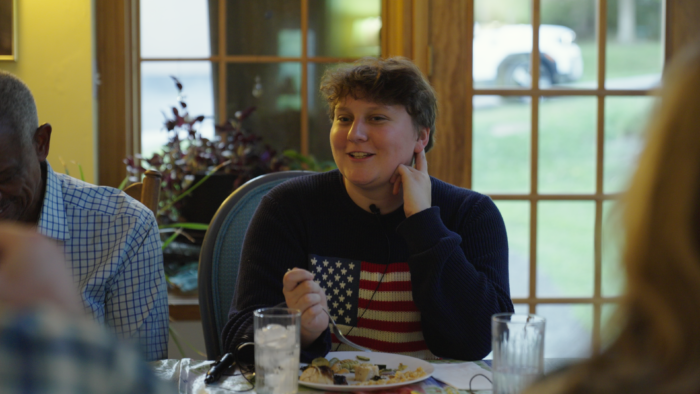
Photo Credit: Ethan Rayment/West Virginia Public Broadcasting
“I remember at a job I used to have, one of my coworkers came up to me the day after I trained him and said, ‘I just realized that gay people are just like everybody else.’ And I was like, well I’m happy that I’m the one you’re saying that to and not someone who’s a lot meaner.
“His truck broke down, and I started driving him home every night. And I was like, ‘Ask me any question. Anything that you have, I don’t care how invasive it sounds because the issue is that people don’t know people. … Feel free to ask me the most offensive thing you can possibly think of because I will happily give you an answer.’ It’s just having real-life human interactions with people changes everything.”
— E Provost
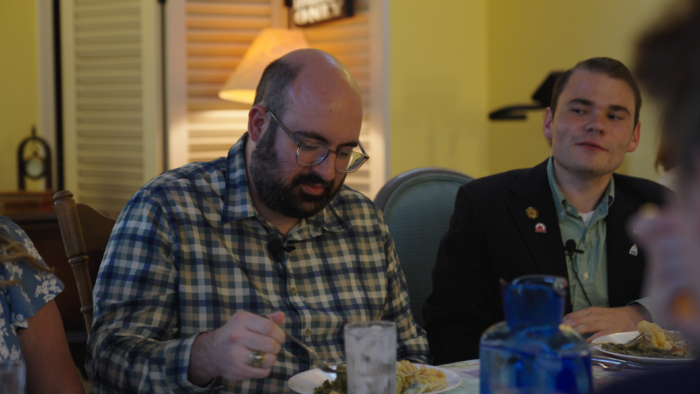
Photo Credit: Ethan Rayment/West Virginia Public Broadcasting
“The current administration with level of science, not only medical, but STEM outside of it, it’s [federal budget cuts] an extinction level event. … When the DOGE cuts happened, and I can’t be more clear with this, when we had 22-year-olds that didn’t understand the difference between ‘transgenic’ and ‘transgender’ in their cuts of government programs, then we’re just throwing the baby out with the bathwater. That’s the wider science. That’s engineering, that’s everything.”
— Frank Annie
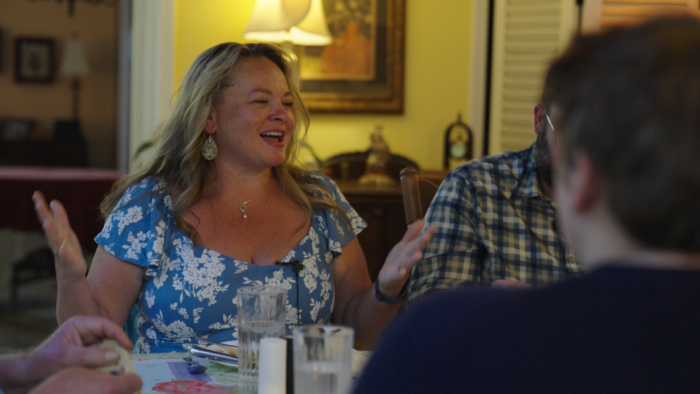
Photo Credit: Ethan Rayment/West Virginia Public Broadcasting
“I don’t think there’s anything you can do to convince the anti-vaxxers to change their minds. Because they’re saying they don’t trust science, and yes, they might have had a bad experience or know someone who had a bad experience. Statistically, that is a very small number of people. These are people who just have a firm conviction about personal freedoms. … It is a sociological issue. It has nothing to do with medicine, and I don’t see that divide getting crossed with science.
“I think the pendulum eventually swings back on everything, and that’s why I’ve got friends who, they freaked out during the first Trump administration. They’re freaking out now. And I’m like, ‘Just run your clock down. Everything ends.’”
— Juliet Terry
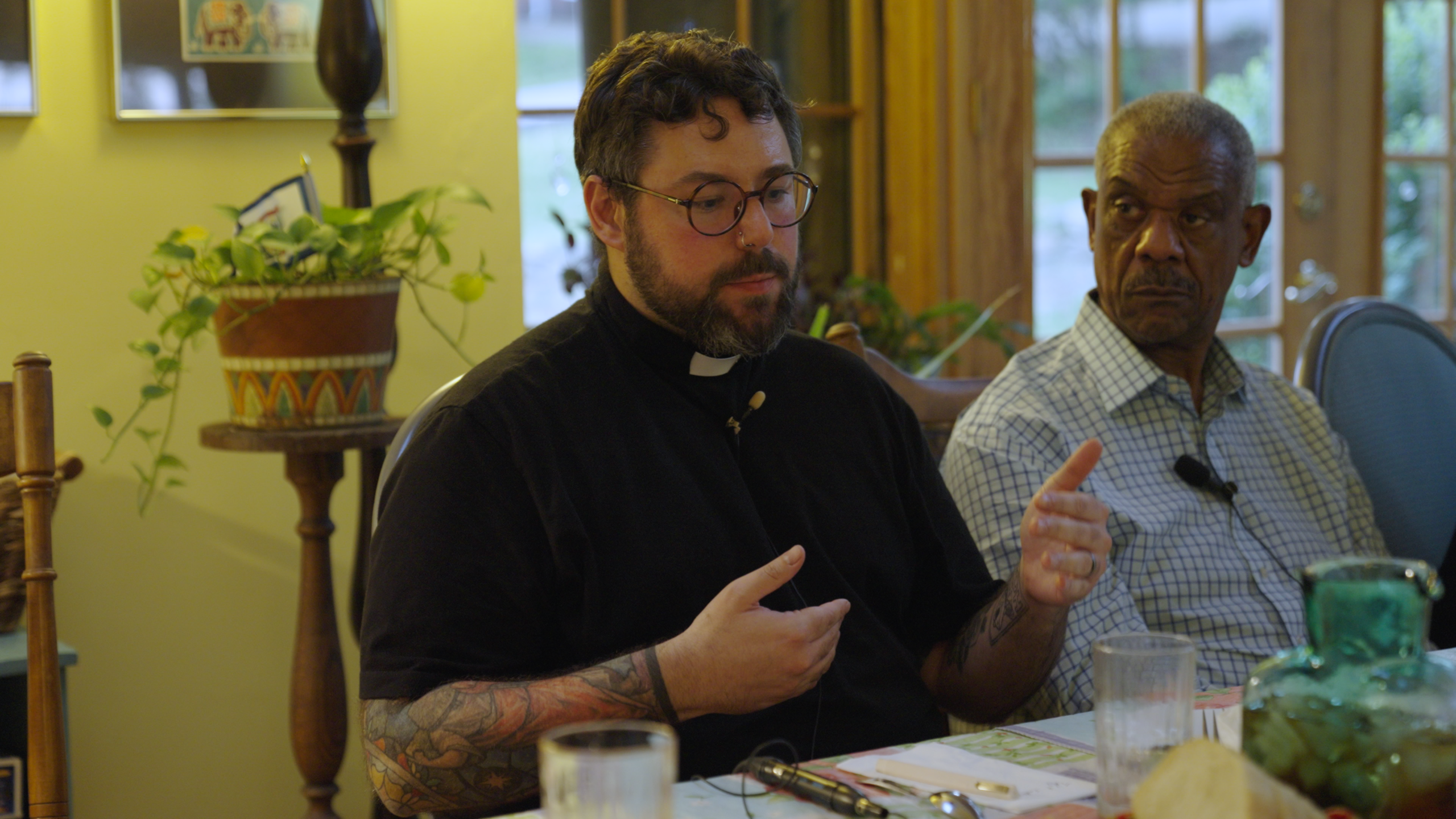
Photo Credit: Ethan Rayment/West Virginia Public Broadcasting
“Immigration in particular for me is, it is one of those scapegoats that will always be there. In Scripture itself, in the Christian canon, Old Testament and New Testament, it says more than, I believe it’s 500 times that we are called to protect the immigrant. The unborn is mentioned maybe five to 10 times. But the immigrant is told to be protected over 500 times.
“And folks that claim they follow Jesus, they claim they love this carpenter from Nazareth, they claim that the cross is the most influential moment in human history for them, will then treat immigrants as if they are subhuman individuals, and it enrages me.”
— Rev. Darick Biondi