


Your browser doesn't support audio playback.
Eight state lawmakers sent a formal letter Monday to Sens. Shelley Moore Capito and Jim Justice requesting the federal legislators support a national ban on greyhound racing.
The Greyhound Protection Act (H.R. 5017), is an amendment recently adopted into H.R. 7567, the Farm, Food, and National Security Act of 2026, also known as the Farm Bill. The pending federal legislation will end dog racing nationwide by prohibiting the use of interstate commerce to support racing – including the interstate transport of dogs. If passed, the bill will also bar U.S. gamblers from betting on foreign races and block the export of American dogs for racing elsewhere. The U.S. House of Representatives passed the bill in April and it is now in the hands of the Senate.
The West Virginia legislators who signed the letter are:
- Sen. Mike Azinger, R-Wood
- Del. Jarred Cannon, R-Putnam
- Sen. Anne Charnock, R-Kanawha
- Sen. Vince Deeds, R-Greenbrier
- Senate Majority Leader Patrick Martin, R-Lewis
- Del. Jonathan Pinson, R-Mason
- Deputy House Speaker Matt Rohrbach, R-Cabell
- Sen. Chris Rose, R-Monongalia
“We’ve looked at this several times in the past, and it’s never got across the finish line, but this time Congress is seriously looking at making greyhound racing, in effect, illegal,” Rohrbach said. “This letter was to show support for this bill that’s moving before Congress.”
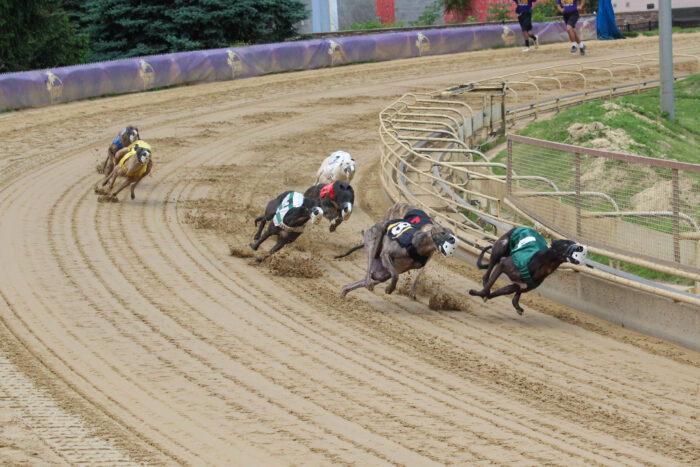
The Mardi Gras Casino and Resort in Nitro and the Wheeling Island Hotel Casino and Racetrack in Wheeling host the country’s last two remaining greyhound racetracks after Arkansas banned live racing and closed its last racetrack in 2023. Dog racing is still legal in five states, including Alabama, Iowa, Kansas, Texas and Wisconsin, but none currently have active dog racing tracks.
Rohrbach said the state House of Delegates successfully passed a bill in recent years that would have ended greyhound racing in West Virginia , but the bill was defeated in the state Senate. He said he wanted to take advantage and support similar action at the federal level where it seems to have a better chance at becoming law.
“We’ve looked at it twice. Both times, I’ve been in favor of doing away with it, and I think it’s time,” Rohrback said. “Every other state in the union has banned greyhound racing. We are literally the last state still allowing it, and I think it’s time to go ahead and join the other states and look for ways to buy the people out. The operator Delaware North did the same thing in Arkansas, they bought the breeders out over a certain period of time, and I think it’s time to do that”.
In the letter, the lawmakers argued that a federal ban “would help West Virginia follow the path that all other states have already taken, and most importantly, it will free up significant state tax revenues for unmet needs in our state.”
“We’ve known for a while that the gambling from greyhound racing has just gone down and down and down, and this is still accounting for having internet gambling,” Rohrbach said. “Now that the bill before us would take that out, then we’re going to have to do something.”
The letter cited independent analysis, including a recent study from Ball State University, that “concluded that greyhound racing provides no net fiscal benefit to the state of West Virginia.”
In 2007, House Bill 2718 authorized casino table games and video lottery machines exclusively where there is also horse and dog racing. The Greenbrier Resort holds the only non-racing casino license in the state due to its historic status.
Ball State’s analysis found that, unlike other states, West Virginia sustains greyhound racing through subsidies drawn from casino gaming revenues totaling roughly $15 million to $22 million annually. Those subsidies “account for 95% to 97% of total purse payments, highlighting that the industry’s continued operation is almost entirely dependent on public support rather than market demand.”
The lawmakers’ letter goes on to say that as live wagering at the track continues to decline, the arrangement where state law compels private casinos to engage in business that loses money while being subsidized by public revenue is inconsistent with their conservative principles.
“Free enterprise does not require – and conservative governance does not condone – statues that force private companies to run unprofitable operations, or transfer payments that keep a failed industry alive at taxpayer expense,” the letter said.
Injuries to dogs also played a role in the lawmakers’ decision.
“The welfare record is indefensible,” the letter states. “State Racing Commission injury reports document hundreds of injuries at West Virginia tracks every year, including catastrophic fractures and on track deaths. In 2024 alone, 489 greyhounds were injured, including 162 who broke bones and 13 dogs that died. All so West Virginians can prop up an industry that cannot exist in the free market?”
Rohrbach added that the coalition was strongly in favor of animal rights, and said he felt the industry is simply not viable for much longer.
In recent weeks Capito has expressed concern about the economic effects of the industry’s end, notably the loss of revenues that go to the pensions and health retiree benefits.
The U.S. Senate is expected to take up the bill this week.
Read the full letter below: