


Your browser doesn't support audio playback.
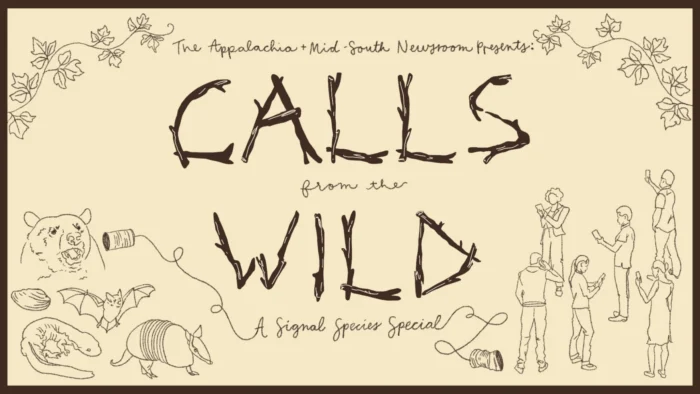
Signal species are constantly sending humans messages about our changing world, and the Appalachia + Mid-South Newsroom produced an hourlong radio special all about them.
Nature is often a source of comfort. For much of the year, we can count on birds chirping, butterflies hovering near flowers and squirrels scurrying up trees.
But sometimes we may notice something different about our wildlife neighbors. An armadillo makes its way into your backyard. A bear starts showing up at your trash can. Thick vines swallow a forested hillside in town. Or maybe you’re seeing less of a critter that once seemed abundant.
These are examples of signal species. The behaviors of animals, plants and other organisms can tell us a lot about our changing world. Will we listen?
From the Appalachia + Mid-South Newsroom, “Calls from the Wild” is an hourlong special presented by Deputy Managing Editor John Boyle that explores these signals, the effects of human activity on ecosystems and how we can all play a role in maintaining the natural beauty so many of us count on.
WVPB’s News Director Eric Douglas contributed to the special by joining a spring bat count, hiking up and down a mountainside to see these animals in action. Diseases like white-nose syndrome and climate change have caused mass population loss among bat species, and the consequences could be costly.
“Calls from the Wild” is a production of the Appalachia + Mid-South Newsroom, a collaboration between West Virginia Public Broadcasting; WPLN and WUOT in Tennessee; LPM, WEKU, WKMS and WKU Public Radio in Kentucky; and NPR. Sign up for the weekly Porch Light newsletter here for news from around the region.