


Your browser doesn't support audio playback.
This interview originally aired in the April 27, 2026 episode of West Virginia Morning.
There are still many questions that surround the chemical incident near Nitro last week that killed two workers. Reporter Chris Schulz spoke with Dr. Christopher Martin, a specialist in occupational and environmental medicine at West Virginia University (WVU), to try and shed some light on what happened.
This interview has been lightly edited for clarity.
Schulz: When you hear about an incident like this, what are your first thoughts?
Martin: Well, of course, the victims and their families and the tragedy that’s involved, the other people that have been affected, and, of course, the community as a whole. This is deeply traumatizing to everybody in the region. We’re a close state, and the whole state is feeling this. Of course, when you have these tragedies, I’m in a school of public health, we always think about prevention. What can we learn from such a tragedy? By definition, work related fatalities are all preventable, 100% preventable. And so what can we do to make sure that this episode never happens again. What can we learn from it? It’s very important, and I know these investigations are going to be launched to look at exactly what happened, with the intent that nobody else loses a loved one.
Schulz: What can you tell me about our current safety standards? Are they as stringent as you would want them to be?
Martin: We know that recently, this has been very much in the news. These standards — there is always a tension in the occupational safety and health world between protective standards and the counterpoint to that is, if it becomes so constraining and so difficult and so bureaucratic, does that impede business? That’s been a tension that we’ve lived with ever since these standards came into being. But we do know that occupational safety and health standards have made an enormous impact. We have seen an approximate 90% decline in fatal occupational injuries in the last several decades. So they are important. They are necessary.
The question is, was an existing standard violated? That is really the issue that the inquiries will have to determine as to what went wrong. In other words, was this a failure to abide by existing standards — which would lead to certain courses of action — or are new standards needed to protect against such an episode in the future?
Schulz: As you alluded to, we won’t know for months, if not years, the specifics surrounding this incident, but we do at least have an initial report regarding what all was involved. Let’s start with the nitric acid. What is that, and what are the dangers of working with it?
Martin: What are the dangers beyond it simply being an acid? The health hazards of acids are common, and so they relate to that effect. As most of your listeners will be aware, acids are chemically damaging, and they share that, whether it’s nitric acid or sulfuric acid or hydrochloric acid. They share that property of being highly corrosive on contact. So they damage the tissue that they come into contact with. If that’s a skin exposure, it’s a skin burn. If it’s an inhalational exposure through vapor, for example, or mists, then it can be a lung injury. And so it’s a direct, immediate corrosive effect, which is what you would see from any type of acid.
Schulz: Initial reporting indicates that nitric acid combined with another substance to create hydrogen sulfide. My very basic, cursory review of the chemistry out there indicated that this is uncommon to have nitric acid convert into hydrogen sulfide. What can you tell me, if anything, about the chemical reaction that may have occurred?
Martin: That’s correct and if we start at the end, which is hydrogen sulfide, we all learn about it in our training in my discipline. It’s standard in any industrial toxicology course to learn about it. And we learn about it because it has a long history.
It’s a very common exposure. Decaying organic matter produces it. It’s present in oil and gas fields. It has a long history, originally with sewer gas, and so we knew that what was fatal about sewer gas, as our understanding increased, was hydrogen sulfide. It’s even apparently referenced in Victor Hugo’s Les Miserables as a source of fatalities.
We know that in the United States, hundreds of people seek medical care for exposure to hydrogen sulfide because it is such a widespread exposure, again, usually naturally derived. There are fatalities, sadly, every year, usually less than 10.
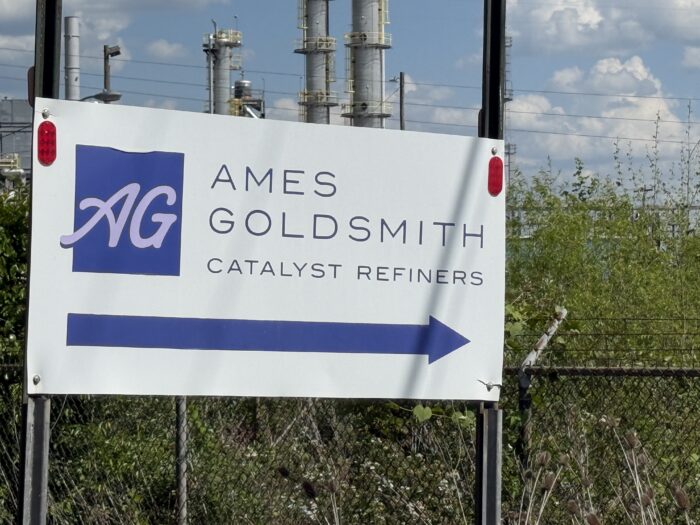
But this is a particular agent that we fear, because it is rapidly fatal in high level exposure scenarios. You’re right that this is not the typical exposure scenario that would lead to the creation of hydrogen sulfide, which is again more a naturally derived exposure source. However, we do know that in silver refining, which is what this facility was involved in — and this was during maintenance, as I understand it, and cleaning – that is a particularly dangerous time, because when we’re cleaning, we can liberate chemicals through chemical reactions, as appears to be the case here, that are unexpected that we didn’t know about. Versus when it’s usual operations, you know exactly what’s going on.
So what I believe happened, and again, I’m basing this on media reports and other information, is when you’re cleaning and silver refining, a lot of what you’re cleaning out is called silver mud, silver sulfide. That could be a potential sulfide source, that when it comes into contact with an acid, potentially nitric acid — and of course, the media reports another propriety chemical, was involved in this as well that we don’t know the specific composition of — but acids could react with the silver sulfide and liberate hydrogen sulfide gas. Again, uncommon, not the typical exposure source, but what’s described in media reports is a sudden, violent reaction. And we know that hydrogen sulfide is fatal, and that’s what led me, early on, even when much of the reporting was focusing on the nitric acid, to think that it was, in fact, the hydrogen sulfide.
Because when you have two on-site fatalities, in other words, the workers are clearly incapacitated rapidly and died on site. That is what we fear about with hydrogen sulfide. In fact, it’s so notorious that we call it a knockdown. And that word, knockdown, is associated with high level inhalational exposure. It can happen within seconds.
Schulz: I was under the impression, just based on some of this initial reporting from county officials that there was an explosive event and that the concussion of the explosion may have been what ultimately killed these two workers. However, what you’re saying is that rapid exposure to hydrogen sulfide may have been potentially just as culpable.
Martin: Correct, yes. And again, the rapidity of these deaths, they were unresponsive. CPR was administered immediately. To me, it could be a concussion. Again, there’s a lot that’s not known at this time which is typical of these events. But nonetheless, this rapid onset fatality suggests to me that it was acute toxicity from hydrogen sulfide.
Schulz: You alluded to a substance that I saw someone refer to as a class of chemicals, and not a reference to a specific chemical, which was M2000A. What, if anything, can you tell us about that substance?
Martin: Nothing essentially. It is a proprietary chemical, and so under some situations, it is not possible to get specific chemical composition information if the producer of that chemical has argued that this would represent a risk to the ability of them to market the product. Now, that does not apply to physicians treating the cases. So the physicians in the hospital, if they were to call and need to get that information for the health of their patients, then that information has to be disclosed, but more widely, it would not be easily obtainable.
Schulz: If there’s anything that we haven’t discussed that you feel is important for us to know, or if there’s anything that we did touch on that you’d like to highlight at this time, please do so.
Martin: A lot of concern arises with these episodes, and so I think we need to acknowledge that there is a physical aspect to this, but there’s also a mental health aspect to this. So as I said at the outset, this is deeply traumatizing to the community, and the closer you were to this event, both geographically and in terms of your relationships, this is going to take a toll on your mental health. I think it’s important to acknowledge that and ensure that people feel comfortable discussing it, getting treatment. Again, this is a real shock to everybody, and we should acknowledge that and encourage people who are experiencing that to seek care and support.