


Updated Friday, Nov. 13 at 5:02 p.m.
Justice Charles Trump dissented from the majority, arguing in a 28-page filing that House Bill 2755 is not unconstitutional.
“Rather, it establishes procedures governing the exercise of the rulemaking authority that has been delegated to the Board by the Legislature in statute,” he wrote. “The Legislature possesses the sole constitutional authority to prescribe those procedures.”
Trump goes on to say that the Heckler ruling, the basis of the majority’s decision, ” erroneously transformed a statutory grant of rulemaking authority into a constitutional exemption from legislative oversight, an error that the majority perpetuates here.”
Original Story:
The West Virginia Board of Education will retain its rulemaking authority over the state’s public schools.
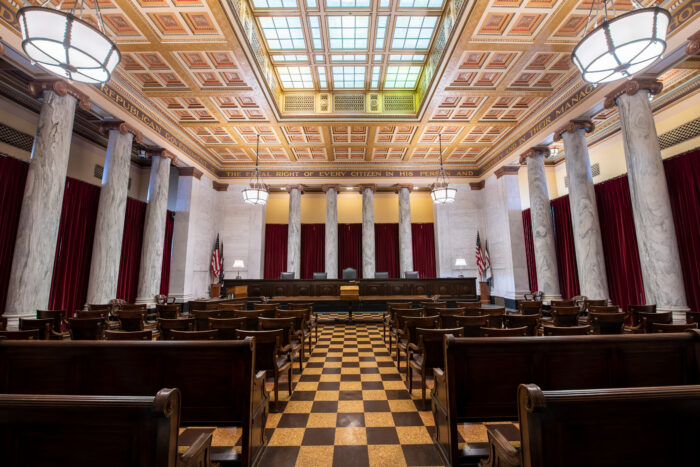
The Supreme Court of Appeals of West Virginia ruled Friday that “rulemaking by the State Board of Education is within the meaning of ‘general supervision’ of state schools pursuant to Article XII, Section 2 of the West Virginia Constitution, and any statutory provision that interferes with such rulemaking is unconstitutional.”
Passed in 2025, House Bill 2755 required West Virginia Board of Education policies to go through the Legislative Oversight Commission on Education Accountability (LOCEA), and the full legislature for approval, rejection or modification before those policies can become effective. Friday it was ruled unconstitutional.
Shortly after the bill’s passage, the board voted to file a school vehicle policy with the Secretary of State Kris Warner’s office. The filing was quickly rejected, with Warner citing HB 2755 as explanation, and setting the stage for the current legal showdown.
The board has maintained that such oversight is unconstitutional. That argument is strongly bolstered by the 1988 state Supreme Court ruling in West Virginia Board of Education v Heckler, which maintained that statutory provisions that interfere with the board’s rulemaking authority are unconstitutional.
Friday two of the justices agreed with that assessment, upholding Heckler.
“We conclude that this Court has previously decided the issue presented in this case and held that a statute enacted by the Legislature that required the Board to submit its rules to the Legislature for review constituted an interference with the Board’s rule making power and was therefore unconstitutional,” Justice H.L. Kirpatrick wrote for the majority. “Finding no reason to depart from our prior decision on this issue, we, therefore, grant the requested writ of mandamus.”
Kirpatrick was joined by Senior Status Justice Elizabeth D. Walker, sitting by temporary assignment. Justice Charles Trump dissented from the majority and reserves the right to file a separate opinion, but one had not been published at the time of reporting Friday. Justice James W. Flanigan disqualified himself from the case and did not participate in the decision of this case.
Stating Their Case
During oral arguments in October Michael R. Williams, solicitor general of West Virginia, argued that HB 2755 doesn’t seize the board’s rulemaking power, but merely gives the legislature one regular session to decide whether to legislate.
Chris Smith, attorney for the board of education, conceded that the legislature does maintain an oversight of the board.
“This is not a case saying the legislature can’t do anything or that the legislature has no powers,” he said. “This is a case saying that the legislature cannot wrest from the board of education its rulemaking powers.”
But Smith pointed out that the legislature can and does regularly pass educational initiatives that it wants to see done. He conceded that such laws do supersede the board’s rule-making authority and pointed to the recent food dye ban as an example.
With any piece of legislation, once it has passed the legislature, the affected department or agency creates “rules” to implement the law. These are the rules by which the agency operates. There is a legislative rules committee that approves those rules, but rarely do they interfere, leaving the issue to the experts. The 1988 ruling found that the legislature maintained its ability to pass laws regarding education in the state, but it could not interfere on how they were implemented.
A ballot initiative in 2022 to change the state constitution to allow for legislative oversight of the board failed.
Friday afternoon the West Virginia Department of Education thanked the court on behalf of the board “for its decision to uphold the will of the voters and the State Constitution, which grants the State Board of Education authority over the rulemaking and oversight of education policy. The WVBE will continue its important work of providing leadership, oversight and support to the education system and children in West Virginia.”