
Your browser doesn't support audio playback.
It can be hard for rural West Virginians to access resources for health, education and professional development. For Deaf residents, those challenges hit even harder, because existing support may not be inclusive.
That is why groups like the National Center for Deaf Services (NCDS) offer specialized resources for members of the Deaf community. Executive Director Christine Firkins says Deaf-inclusive mental health, professional development and educational resources can help amend gaps.
“A lot of families that have Deaf children don’t know what to do. They tend to just speak and gesture and see if that works,” she said. “But oftentimes the children don’t respond. And that’s the important window for language acquisition, between 0 to 5.”
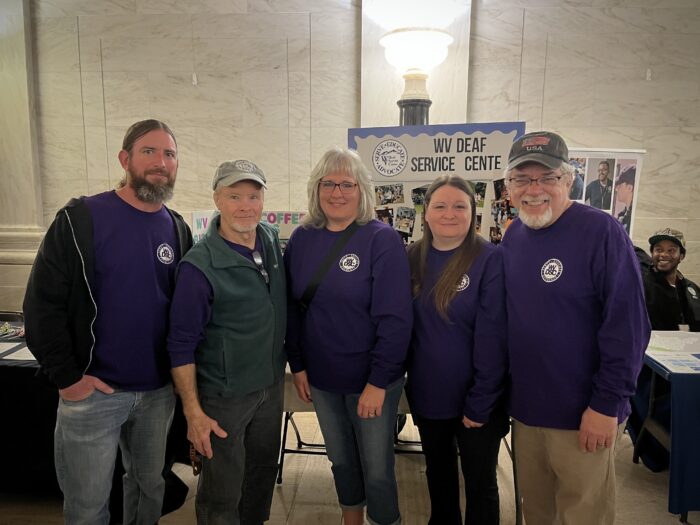
Firkins was one of several representatives for Deaf community groups to visit the West Virginia State Capitol for Deaf Awareness Day Wednesday. Groups spoke with lawmakers and residents about the services they provide, and ongoing needs for the state’s Deaf community.
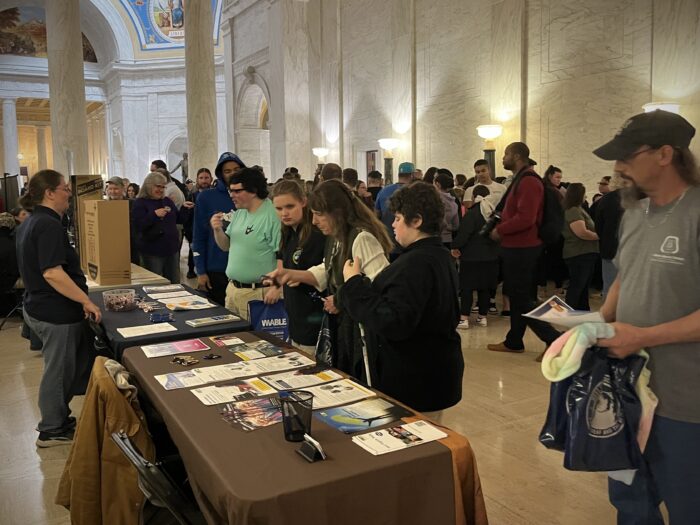
Photo Credit: Jack Walker/West Virginia Public Broadcasting
Scott Hottle is a district manager for the Jackson County-based West Virginia Deaf Service Center. The organization helps Deaf residents and their families access American Sign Language classes, professional development services and Deaf-inclusive recreational opportunities like youth summer camps.
“We work together with the deaf community,” Hottle said.
Lisa Keathley, who works alongside Hottle, said the organization often gets contacted by public entities like the West Virginia Department of Health and Human Resources when hearing parents are unsure how to teach their kids American Sign Language.
“They contact us a lot of times to ask us what to do in these situations when hearing parents have Deaf and hard-of-hearing babies,” she said. “We really reach out to them to let them know [we are here].”
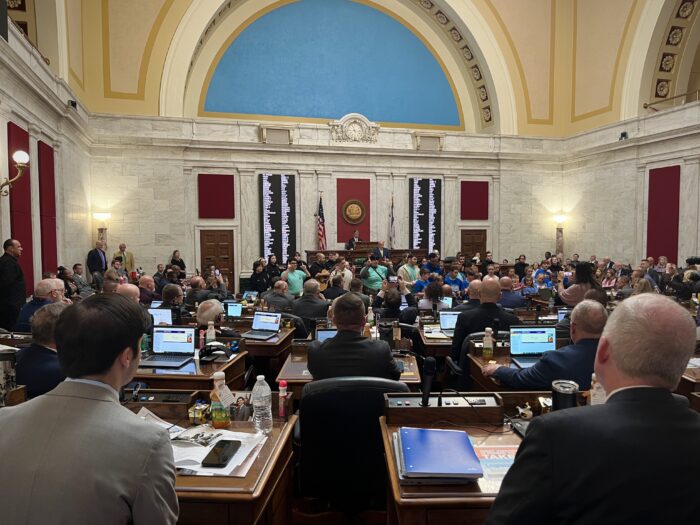
Photo Credit: Jack Walker/West Virginia Public Broadcasting
Delayed language acquisition can make it harder for Deaf youth to keep up academically, Hottle said.
“A lot of children born to hearing parents don’t learn a language until later in life, whenever they enter school,” Hottle said. “So that really needs to improve.”
The newly established NCDS also partners with the West Virginia Division of Rehabilitation Services to help Deaf residents access salaried job opportunities.
Firkins said services like these fill gaps in public services, which often are the responsibility of the state. But this work takes funding, and Firkins hopes state lawmakers consider expanding their financial support for Deaf organizations.
“That’s really the goal, is to be able to grow,” she said. “So direct state funding would be a tremendous help.”