


Your browser doesn't support audio playback.
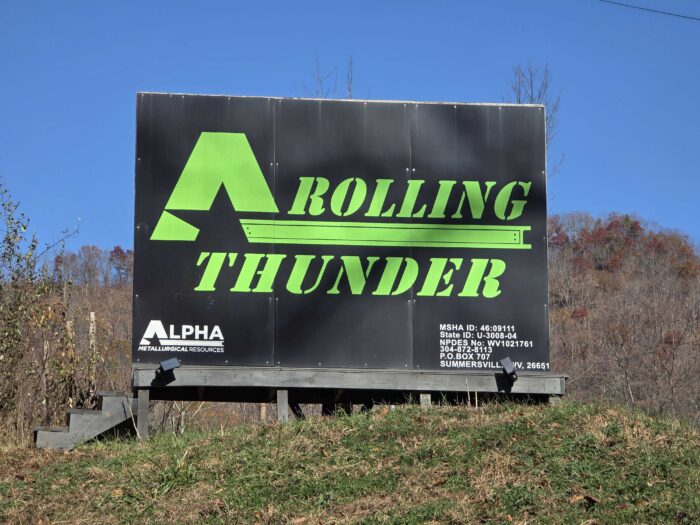
The Mine Safety and Health Administration (MSHA) has released their final report on the mining accident that killed Steven Lipscomb, a 42-year-old section foreman with over 19 years of mining experience, on Nov. 8, 2025. He died in the Rolling Thunder Mine when it filled rapidly with water after miners broke into an adjacent abandoned mine.


Photo Credit: Courtesy of Hafer Funeral Home
There was a five-day search including divers and cavers used to search in zero visibility. Lipscomb was found on Nov. 13, 2025, after the water levels were pumped down.
According to the report from MSHA, the accident occurred because the mine operator did not have an accurate map identifying the adjacent mine. Additionally, the mine operator did not follow the approved alternate drill plan to allow safe development of the active mine.
The mine is operated by Aracoma Coal Company, a subsidiary of Alpha Metallurgical Resources. MSHA completed the last regular inspection at Rolling Thunder in September 2025. A regular inspection was ongoing when the accident occurred, but no MSHA inspectors were on-site at the time.
Nearby Abandoned Mine Contributed To The Incident
The Rolling Thunder Mine is located next to the abandoned Mountain State Mine.
The last known map of that mine was produced on Feb. 22, 1945. Investigators determined that the map of the Mountain State Mine was not accurate, saying it was 500 feet away from the mining location. Not having an accurate mine map identifying the boundaries of the abandoned Mountain State Mine contributed to the accident.
An Alternate Drill Plan Didn’t Go As Planned
Since the Mountain State Mine was developed when mines frequently mined past the boundaries shown on mine maps, MSHA required Rolling Thunder Mine to maintain a 1,000-foot distance from the last known extents of Mountain State Mine. To receive approval for mining inside of the 1,000-foot perimeter, Rolling Thunder Mine submitted an alternate drill plan to MSHA that would allow the mine to drill directional holes in advance of mining to verify the absence of the adjacent mine works.
The mine operator submitted an alternate drill plan that allowed the mine operator to drill three horizontal Abandoned Mine Verification (AMV) directional holes from three locations around the suspected location of the Mountain State Mine. After using the directional holes to verify the absence of Mountain State Mine, the plan allowed the mine operator to continue within the 1,000-foot perimeter while still adhering to the 200-foot No Mining Safety Barrier.
The holes were drilled improperly, penetrating downward into a different coal seam that was not mined in the Mountain State Mine.
Four citations were issued for the mine owner Nicholas-Contura, LLC.