Your browser doesn't support audio playback.
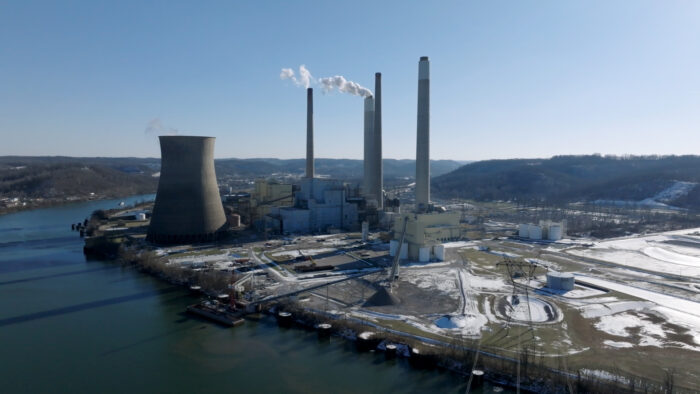
Appalachian Power’s John Amos power plant is the biggest in West Virginia.
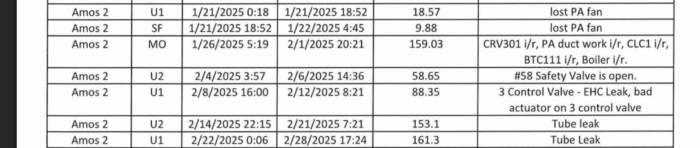
Data the company provided to utility regulators in Virginia show one of the plant’s three units failed on Jan. 21 and 22. This was during one of the coldest periods of the year, with record demand for electricity in the region.
The data show that 800-megawatt Unit 2 failed for 28 hours on those two days. The outage was recorded as unplanned. The unit was not scheduled for maintenance.
Coal’s supporters point to its reliability in extreme weather events like those in January. Seth Feaster, an energy analyst at the Institute for Energy Economics and Financial Analysis, says older plants like Amos are vulnerable to unpredictable breakdowns.
“A plant, like Amos, that is having these outages, is supposed to be reliable,” he said. “They’re getting millions of dollars for being a reliable plant that can deliver power when the grid needs it, and instead, they’re not paying a penalty, but the plant isn’t available either.”
Amos first went online in 1971 and supplies power to West Virginia and Virginia. Debra Pannell, a spokeswoman for Appalachian Power, said the performance of the company’s coal fleet aligns with the average performance in PJM, a 13-state regional grid that includes both states.
Pannell said Appalachian Power did not receive any penalties in PJM for the failure of Amos 2.
In a winter storm over Christmas weekend 2022, Amos Unit 3 was down for a week because of a boiler tube leak, while Unit 1 was down for planned maintenance. Only Unit 2 operated.
Mon Power lost its 684-megawatt Harrison Unit 2 during the 2022 winter event. The unit’s breakdown cost Mon Power $40.5 million in performance penalties, according to testimony to the West Virginia Public Service Commission.
It turns out that Amos 2 was not needed to meet the high demand in January.
“So they got lucky,” Feaster said.
Days later, Amos 2 broke down again for more than 19 days in February.