
Your browser doesn't support audio playback.
One of the less known rules the U.S. Environmental Protection Agency (EPA) rolled out in the final months of the Biden administration required companies to examine the condition of coal ash disposal sites at inactive power plants.
Six such sites ring West Virginia, according to the group Earthjustice, and they pose hazards to rivers and groundwater.
Coal ash contains mercury, arsenic, selenium, chromium and a variety of other substances that can damage human health.
Lisa Evans, senior counsel for Earthjustice, said such sites are not monitored or inspected.
“So these are ponds that are not inspected, not maintained and not monitored,” she said. “So actually, the impact on the environment at these sites is mostly not known.”
They may not be lined or capped, either, and their contents can seep into groundwater.
Electric utilities filed a lawsuit over the rule in the U.S. Court of Appeals in the District of Columbia. The case is ongoing. EPA Administrator Lee Zeldin said in March the agency would revisit the rule.
Evans said the rule imposes the same standards on inactive coal ash sites as it does at ones where a power plant still operates.
“So there has to be inspections,” she said. “There has to be a groundwater monitoring system installed. There has to be a determination of whether the coal ash pond is contaminating groundwater.”
And if contamination is found, the company has to clean it up.
Karen Wissing, as spokeswoman for Appalachian Power, said it’s assessing two of the sites, on the Kanawha River at Cabin Creek and Glasgow, and will submit a plan to the EPA.
Its Glen Lyn site, on the New River just across the border in Virginia, will be remediated according to Virginia law, she said.
The Glen Lyn and Kanawha River plants closed in 2015. The Cabin Creek plant closed in 1981.
Appalachian Power’s Sporn and Kammer plants, along the Ohio River, both closed in 2015.
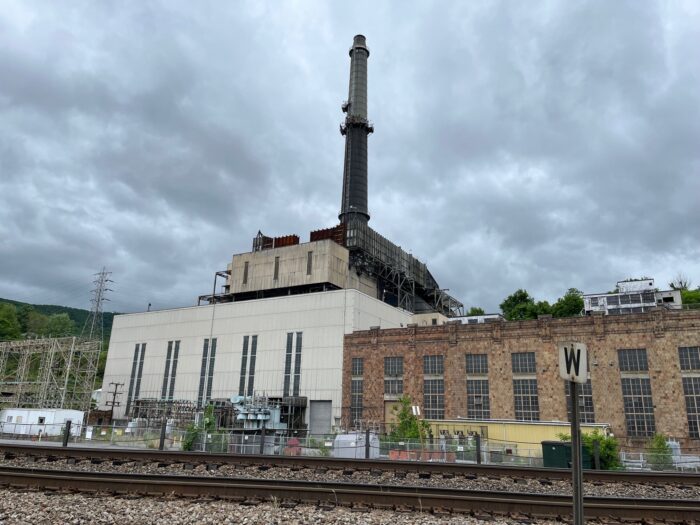
Potomac Edison’s R. Paul Smith Power Station, in Williamsport, Maryland, across the Potomac River from Berkeley County, closed in 2012.
That coal ash site is on the West Virginia side of the river and was recently repurposed as a solar farm.
Potomac Edison parent First Energy removed the coal ash from the site in 2022 before it built the solar facility.